Monday, September 22, 2025

Collaboration in Educational Technology: Building Learning Together


Collaboration is a key component to how people learn and solve issues whilst working together towards achieving a common goal. In education, collaborative learning strategies help students not only gain knowledge but also pick up crucial skills such as teamwork, sharing ideas, understanding and connecting with each other. Through collaboration they also learn how to solve problems. When coupled with technology, collaboration can be a powerful tool.

Why Collaboration Matters in Educational Technology 

  1. When students collaborate, they elevate their thinking by expressing and explaining themselves and they question each other to gain insight for a better understanding.                  
  2.  Skills such as coordinating tasks, giving feedback and using collaborative tools will all be essential to help students navigate the world of work which has become increasingly technological and are sometimes remote, working across different time zones.                         
  3.  Educators also benefit when they collaborate with their peers, sharing lesson plans, helping each other with designing assessments and mentoring each other.

Tool / Type

What It Does

Benefits & Use Cases

Cloud-based document editing (Google Workspace, Microsoft 365, OneDrive)

Multiple people can edit the same document/presentation/worksheet in real time

Good for group essays, peer editing, collaborative research. Speeds up feedback loops Lemonpeak+1

Interactive boards / virtual whiteboards (Jamboard, Padlet, FigJam)

Visual brainstorming and idea mapping; sticky notes, images, drawings

Helps in planning, mapping concepts, group problem solving. Especially useful when students are remote Edcafe AI+1

Discussion / video response tools (Flipgrid, Zoom, breakout rooms)

Students share ideas via video, respond to prompts asynchronously or synchronously.

Builds connection, gives voice to those less comfortable speaking up in class. Good for reflection and peer feedback. Kitaboo+1

Assessment & feedback tools (Wooclap, Peergrade)

Allow peer assessment; real-time polling; interactive question/quiz formats.

Encourages accountability; lets learners see other perspectives; teaches constructive critique EdTech Impact+1

Learning Management Systems (LMS)

Central hub for resources, assignments, discussions, collaboration tools

Keeps things organized; supports blended learning; can integrate many of the tools above  Lemonpeak+1


Overcoming challenges

Collaboration isn’t always a smooth journey, conflicts may arise, or some students might not pull their weight. Teachers can address these issues by setting clear expectations, monitor the group dynamics and provide guidance. Teachers should encourage open communication and respect to ensure that collaboration remains productive and inclusive.

Conclusion

Student collaboration isn’t just a classroom activity, but it

is also a life skill. By working together students learn to communicate effectively, think critically and build relationships that will not only help in their academics but will also help them to thrive in a professional setting.

Sources

https://lemonpeak.com/blog/2024/05/09/shaping-the-future-of-education-collaboration-tools-and-remote-work-technologies-in-edtech/?utm

https://www.edcafe.ai/blog/collaboration-tools-for-teachers?utm

https://kitaboo.com/technology-shapes-collaboration-skills-in-k12-students/?utm

https://edtechimpact.com/categories/collaboration/?utm 


Putting Students First in a Tech Classroom


 The idea behind this is because educators can get so caught up in apps, tools and new technology trends that they forget what really matters the students, who should be the heart of everything they do.

Why Student-Cantered Technology Matters?

The ISTE standards for students aren’t about making students tech savvy but for developing learners to solve real world problems, think critically and how to thrive in a connected world. There are seven student standards:

  • Creative communicators – students who express themselves creatively

  • Global collaborators – those who connect beyond the physical classroom

  • Computational thinkers and innovative designers – they tackle challenges with a sense of confidence 

  • Digital citizens – one who acts responsibly and ethically when interacting online

  • Empowered learners – those who take the initiative and don’t wait for learning to happen, they make it happen

  • Knowledge constructor – students who evaluate and do their research to solve problems

These standards go beyond just merely using technology but seeks to point out how students should engage with knowledge and interact with others in the world.

The Coach’s Role?

Coaches are reminded to use these standards as a means to encourage and support students to meet their learning goals.


Global Collaboration in Education

Because of the advancements in educational technology, students and educators are now able to collaborate beyond physical boundaries. The way education is delivered continues to evolve daily, opening up opportunities for students to engage in international dialogue and work together in new ways. Global collaboration brings exciting possibilities to the field of education and in this post i'd like to share what I believe are the best technology tools to facilitate it.


1. Google Workspace

A suite of cloud-based tools that include Gmail, Google Drive, Google Meet, Google Classroom, and more. These tools allow for real-time collaboration on documents, presentations, and spreadsheets, making it easy for students and teachers to work together.

2. Padlet

An online collaborative board that allows students and educators to post notes, images, links, and videos on a shared wall. It’s like a virtual bulletin board.

3. EdPuzzle

An educational tool that allows teachers to create interactive video lessons. It enhances the learning experience by enabling educators to add elements like quizzes, notes, and audio commentary directly into videos. 

4. Epic!

A digital reading platform designed to provide children with access to a variety of educational content in both book and audiobook form, engage kids in reading and encourage a love of books through a fun, interactive, and personalized experience.

5. Gramarly

An AI-powered writing assistant that helps students and educators improve their writing by detecting and correcting grammar, spelling, punctuation, clarity, tone, and style issues.

Global Collaboration for Education


 Monday, September 22, 2025

Why Should Global Collaboration for Education Important for Young Generations

Many young students are opening their visions to education or furthering their schooling. This topic is controversial to some parents whether AI tools should be used in collaboration, as well as if children should have access to exploring connections globally. While understanding the fears that come with putting themselves out there, it's not personal, but it's for the academic connections. 

A recent website titled "21stCenturyED", explains the benefits and the issues with global connections in education. There are four big ideas when it comes to sharing education globally, which include:

  • Sharing innovative teaching methods and technologies
  • Enhancing professional development for educators
  • Develop cultural inclusive curricula that reflect global realities
  • Expand access to quality education for unreserved populations
These four ideas allow students to grow with one another, while also seeking the differences in how education is taught around the world. Stated in the article, "As over 21% of Americans do not use English as their home language, the skill of patient communication will serve students in America and abroad." I found this quote important to the reader as communication is one of the biggest skills to have when working. Communicating to those around you, in state or globally, is a huge way to seek interest in other topics. 

Global Learning with UNESCO's global monitoring report allows for global partnerships to develop goals for students across the world. Many people in America and out struggle with real education due to poverty and so much more. This system allows for students to receive a fair and proper education like others. 

This is the first time I've ever done something globally through Padlet, which is allowing me to see what education is like with other students around the world. I find it so interesting, and while I cannot share past experiences, this will allow me to speak about my full thoughts on this entire system. I think education is the biggest thing now a days. People who seek jobs are sometimes required to have certain requirements through high school or college. This can be unfair to some as they don't seek the same education as let's say we do. I get to learn and understand their life and how they seek their education while also completing my studies and learning as well.

This website allowed for students to seek independence while also preparing students. A few things its allowing students to do is:
  • Enhance quality and relevance to education
  • Address systematic challenges such as inequality and outdated curricula
  • Develop students who are knowledgeable, culturally aware, and educated in technology
Overall, this system is great and will allow for new ideas to be explore while communicating globally. This change will provide many young educators to seek their education further and allow for students like us to take on the challenge of new and innovative technology with those globally.

At September 22, 2025

Class Room Collaboration

 Collarboration in the classroom is an extremely valuable team for plenty of reasons. Gone are the days of lecturing to students and then sending them on their way. Classes are now a group effort, including everyone and leaving nobody behind. A moshpit of ideas that are guided by your teacher.

Within this post I'll be going through some of the benefits of collabortation as listed by the National Education Association. 

Brainstorming Creative Ideas

 The more minds you have in a classroom, bouncing off one an other and exploring all their different ideas you are increasing the creativity by ten fold. Kids are sometimes scared to share ideas limiting potenial, but through group activity it opens them up and allows a better enviornment  to share their thoughts and feelings. 

Teaches you about Yourself 


Collaborating in a group will not only boost creativity in the group, it forces you to explore your own mind. Sometimes, you'll think of things you did not even realize you felt or knew. For teachers, joining these communites for educators benefits everyone involved and is so very important. The more growth the instructor does, the better they can relay this growth and mindset onto their classroom.

Helping Students

Collaborating with students promotes higher level thinking across the board. Increasing their confidence and self esteem within a group encourages them to explore these more in depth thoughts in a confident manner. Not only is it promoting a intelligence growth, it is promoting their social and team building capabilits. Things that are only increasing in utlity in the world today. 

https://www.nea.org/professional-excellence/student-engagement/tools-tips/benefits-collaboration

Image from https://www.educate-me.co/blog/benefits-of-collaborative-learning 


Global Collaboration in Education

Student Tech: BusBoss on Program Benefits in 2025
To prepare students for a world that is increasingly interconnected, worldwide collaboration is becoming increasingly acknowledged as essential to modern education. According to Kruu Inc., classrooms in the next era of education must transcend time zones and use curriculum that are developed by international teams. This method fosters a vibrant learning atmosphere where students engage with a range of viewpoints, thereby deepening their understanding of cultural nuances and global concerns. Students learn important skills like communication, problem-solving, and flexible thinking, all of which are essential in today's world, by combining project-based learning with global collaboration.


How schools can benefit in different ways:                                  
- Cultural awareness 
- Critical thinking
- Access to resources
- Innovative learning
- Working skills

There are many benefits to global collaboration in education. Students' worldviews are broadened, empathy is developed, and they are inspired to become active in school. Students can interact with classmates around the world through online chats and group projects, providing knowledge and perspectives that enhance their academic path. In addition, as students collaborate to confront problems like social injustice, climate change, and technological breakthroughs, creative answers to global challenges are often developed. In conclusion, global collaboration not only improves academic performance but also prepares students to successfully navigate and constructively contribute to a world that is becoming more interconnected by the day.

Resources

https://www.linkedin.com/pulse/how-next-era-education-requires-global-collaboration-kruu-inc-vwfwc/?trackingId=eIAnRbWnT6SCXkRqwQXY5Q%3D%3D


Collaboration In Education

Collaboration is a huge thing in the classroom. Collaboration can mean the act of working with someone to create something, or two or more people working together to achieve the same goal. As for collaboration in the classroom, this can be achieved by group work, partner work, and even just helping one another on individual work. 

Enhance Team Collaboration: Join One Dynamics' Workshop

I found 10 amazing ways to build collaboration in the classroom. 

1. Choose which students will work together. 

2. Pick group sizes off of what will work best. 

3. Teach students how to listen to one another. 

4. Set rules of language. 

5. Make goals clear. 

6. Give each student a role. 

7. Use real world problems. 

8. Give each group their own task. 

9. Warm students up by playing a game. 

10. Evaluate each group as their own! 

https://gsehd.gwu.edu/articles/10-strategies-build-student-collaboration-classroom

This is just a way to get students acclimated with working together. After this, collaboration should run smoothly. 

Overall, Collaboration is so important in the classroom. It can help students be academically successful, go deeper into content meaning, and most importantly teach students to work with other people. This skill will be a lifelong skill. It can carry into their future careers, when they find a spouse and have a family, and so much more. 


Why Global Collaboration is More Than a Buzzword

Recently, I've reflected on what school should be as the world gets smaller and smaller. Technology enables our students to not just learn from local perspectives but be exposed to peers from around the world, various cultures, and diverse backgrounds. I've seen this in my classroom; even one video conference with a classroom abroad can transform students' thinking; they realize that they're part of a more extensive global community.

One resource that sparked this interest is AVID Open Access’s Develop Global Collaborators: Connect Your Students to Classrooms Around the World. It shows that classroom connections can be more than just pen pals it’s project and inquiry-driven and intensely meaningful. For example, students might work together to combat a common concern or major issue social change, environmental challenges, cultural heritage storytelling where time zones and geography blend. Simple programs like Skype, Google Meet, or shared forums get ideas moving quickly, and students often marvel at what they can learn from each other.


[AI-assisted portion begins]

Studies show that collaborations like this enhance more than academic content. They make students more empathetic, stronger communicators, and more resilient in uncertain situations. When teachers partner and connect with classrooms worldwide, they find that students feel prouder to share their ideas, ask deeper questions, and become problem solvers when things don’t go as planned. These are essential skills beyond class and needed to thrive in the modern world (source).
[AI-assisted portion ends]

I remember connecting my class with a partner classroom across the country, and I could feel the energy shift. It wasn’t just about completing the assignment for a grade; there was curiosity about each other’s worldview. “Do you have this same holiday?” asked one student. “Why does your school day start so much earlier than ours?” was another question posed. Those questions were pure gold. They transcended content and dove into identity, culture, and perspective. AVID’s guide offers starter suggestions, tool recommendations, project scaffolding, and strategies for safe and inclusive connections. Collaboration is not an add-on; it’s a sensibility. When students connect beyond their classrooms, they understand learning is malleable, transferable, and exists for everyone.

Teachers note: the link for the article you suggested in the edpuzzle isn't working used my now that I found.

Using AI for Global Collaboration in Education


The COVID-19 pandemic showed us just how connected the world is, making it the perfect time to help students work together with people from all over the globe. By connecting with others, students can build empathy, learn different perspectives, and improve their communication skills, all part of the Global Collaborator standard in the ISTE Standards for Students. This standard encourages students to use digital tools to work with others, both locally and internationally.

Since the pandemic, digital collaboration has become more important than ever. It helped people stay connected while social distancing, allowed experts to share important information quickly, and helped people understand each other better. When students practice these skills, they not only become better communicators but also leaders who understand and respect people from different backgrounds. 

A great way to promote this is by using projects that connect students from different cultures. Tools like Empatico make it easier for classrooms to connect based on age, schedule, and interests. For example, a teacher might link their class with one in another country. Soon, students are sharing their experiences and learning from each other. One teacher, Anna Crawford, talked about how her students connected with a class in Mexico. What started as nervous camera interactions turned into students teaching each other Fortnite dances and discussing similar issues in their communities, like homelessness and hunger. 

Another important part of the Global Collaborator standard is using technology to learn from experts. Platforms like Flipgrid help students connect with guest speakers and other classrooms from around the world. A project called the #GoalsProject asked students to discuss United Nations Sustainable Development Goals and then work together on projects about issues like climate change and gender equality.

As students get more comfortable with global collaboration, they can tackle bigger challenges, like learning about global problems and finding ways to help solve them. The #TeachSDGs Movement encourages teachers to help students learn about these global goals and act on issues like hunger and climate change.

In short, using AI and technology to connect with others around the world isn’t just about learning new things, it’s about becoming part of a bigger community, gaining new perspectives, and making a positive difference in the world.

Source:

Standards Spotlight: Introduce Students To Our Small, Connected World With The Global Collaborator Standard


Sunday, September 21, 2025

Why Real Collaboration Beats Random Group Work (and How to Do It)


I used to hate group projects because classmates often didn’t do their part, so one person always ended up doing everything. Last semester in my CIS class we tried something different: everyone had a clear role (researcher, coder, tester, presenter), we did short timed check-ins, and each person wrote a one-page reflection. That simple structure made people actually do their share and I learned more than I would have working alone. It made me realize collaboration only works when it’s organized and everyone is held accountable.

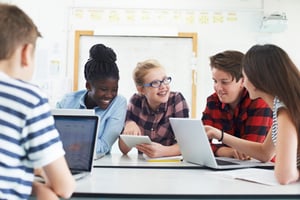
Students collaborating on a classroom project

What collaboration actually means

Collaboration isn’t just putting students in a group. It means designing tasks so everyone has to explain their ideas, ask questions and use each other’s strengths. For example, if you have to teach your part to your teammates, you’ll notice what you don’t actually understand and fix it. And that’s how real learning happens.

One simple, really effective way to put this into practice is the jigsaw method.

How to run a jigsaw (fast and simple)

  1. Split the topic into 3 to 5 small chunks.

  2. Put students into home groups and assign each person one chunk.

  3. Students with the same chunk meet in expert groups to study and prepare a short teach-back.

  4. Experts return to their home groups and teach their piece.

  5. Finish with a group product, like a slide or timeline, and a quick individual reflection or quiz.
    This method forces accountability and helps everyone learn the whole topic.

Two classroom-ready ideas
• Jigsaw plus gallery walk. Short readings, expert groups, teach-backs, sticky-note gallery, then a two-sentence reflection.
• Photo-exchange mini project. Students take one photo of daily life, swap with a partner class, write a 150-word comparison, then discuss what surprised them. It is low-tech but builds cultural awareness and data thinking.

Why teachers should care
Personal learning networks matter. I follow a few teachers on X who post micro-lessons I actually try the next week. One shared a peer-critique routine I adapted into a rubric for my CIS project and it improved feedback quality immediately. Small professional collaboration leads to big classroom payoffs.

Sources / further reading
UNESCO — Global Citizenship Education: https://www.unesco.org/en/global-citizenship-peace-education
ISTE — Global Collaboration resources: https://iste.org/global-collaborations

AI Disclosure: I used Grammarly to revise and improve the wording of a few sentences.

Calloboration in Education

How Working Together Can Make Learning in School. 

Collaboration is a part of effective learning in the world that is rapidly changing every day. on seconf thought of seeing education as a solitary pursuit, where only students work, teachers and even technology come together to improve students’ understanding, students and teachers take up the mantle of the creative environment, which has changed over the years to see education as cooperation rather than as a solitary endeavor. From a pedagogical perspective, the effectiveness of cooperation shows itself in the communication, creativity, and problem-solving skills learners exhibit—things they will need both in school and eventually careers. Collaboration prompts students to talk, exchange ideas, and challenge each other’s views.

In this way, not only does their understanding of the material make it better, but so do their strategic thinking skills and to feel deeply for others. Students are better able to see differences in people’s views and process information when they learn together. Group projects and classroom learning, for example, teach students to practice active listening skills and problem-solving. Also, it aids teachers because all this is done together. Interdisciplinary projects, Professional Learning Communities, mentorship programs, and cross-cultural projects all offer a set of ways for educators to collaborate on strategies, contemplate what is working well, reflect on what is going well, and co-create something new. Teaching in a community can be much more responsive; by dismantling the walls between colleagues and by taking care of it at the individual level, both teachers and students can work together to resolve problems, tailor instruction, and become better teachers.

Global Collaboration Biggest Accomplishments

 Collaboration is the action of producing something with someone or someones. This has been going on since the beginning of time, as people needed another mind to help them figure out something or to look at something with a different perspective. 

Einstein and Marcell Grossman are an amazing example to discuss collaboration. Though Einstein is the most well-known out of the two for developing the theory of relativity, they both were working as Einstein once told Grossman, "You must help me, or else I'll go crazy.". This is the history of collaboration and how, with working together, history can be made. Just like the everyday objects of an iPhone, though, Steve Jobs is the one we all turn to as a co-founder. He had a whole team working on and figuring out a way to design and create the first iPhone. 

Collabortation is what pushes ideas beyond imagination into the real world. Whether it's scientists creating theories, inventors building technology, or simply friends working on something together, progress happens when we work together and look at it in different ways. Collaboration isn't just a part of history; it's the reason we have anything at all to use, to shelter in, or just mathematically, as we know.

Global Collaboration In Technology

Drishti Rathore, a Masters Business Administration student, attended the Italian Tech Fest in India this past weekend. It was a very inspirational event for her as she got to interact with global innovators and business leaders in the technology field. In the conference these leaders shared how innovation in AI and technology is shaping the future.

An eye opener for Rathore as she gained more insight how India is growing technologically and has a few important takeaways.

    No alternative text description for this image
  • "The transformative role of AI and digital technologies in reshaping industries and creating smarter, more efficient ecosystems.
  • The importance of sustainable innovation as a driver of solutions to global challenges such as climate change, energy, and resource management.
  • The power of international collaboration in accelerating progress, knowledge-sharing, and creating opportunities for future-ready leaders" (Rathore).
Everything ran smoothly thanks to Professional in the field like Tarun Anand, Prof Dr Simon Mak, and Amrita Mathews. The commitment of their agenda of global exposure inspired attendees and pushes them to do more. To learn more read this post.

Global Collaboration in Psychology

    Psychology has always been about understand people, but in todays world, collaboration allow us to expand that understanding across cultures, languages, and borders. The global collaboration in psychology has helped researchers and students to explore how mental health and cultural perspectives. We have the ability to have data on any cases, even though we haven't came across that specific cases, some psychologist have already shared their data, ideas, and resources, which makes the field more inclusive and easier.
    
    One major benefit of global collaboration is that it reduces bias. Psychology research has  been overlooking cultural diversity. International projects allow us to understand human behavior in a way better way. Not only is this making research stronger but also ensure that psychological practices are more ethical. 


    Technology has been a key driver, not only in our day-to-day lives, but also in the global collaboration in psychology. Many tool are being used such as Zoom, databases, and social media platform X, instagram, Facebook, Snapchat, and etc. According to International Union of Psychology Science (IUPsyS) brings research together across the world to promote their results and findings. 

References: 
Henrich, J., Heine, S. J., & Norenzayan, A. (2010). The weirdest people in the world? Behavioral and Brain Sciences, 33(2–3), 61–83. https://doi.org/10.1017/S0140525X0999152

International Union of Psychological Science. (n.d.). Advancing psychology worldwide

Thursday, September 18, 2025

AI for Elective Teachers: Creating an AI Expert Guessing Game

Artificial Intelligence in Education is much more than a tool for lazy students to plagiarize their assignments. Believe it or not, AI can actually be very helpful in the classroom, especially to teachers. From grammar checks to fun projects, If used wisely, AI can be the tool you need to bring your lessons to the next level! 

In project 1 from “Hands-on AI Projects for the Classroom: A Guide for Elective Teachers” students from 4-12 grade think about how experts classify large sets of data and use that information to make decisions to solve real-world problems (Black & Brooks-Young, p.12). The students begin by working in small groups to organize a set of data, considering different types of data representation and how AI can use decision trees to classify data. Then they think about real-world problems that AI could solve with classification algorithms. Next, they develop their own decision tree to classify content from their class. Finally,  they reflect on their learning and consider the impact of using AI for classification.


This project could be used in any subject area, at any point in the school year. It is a great way to spark the students’ interest and get them involved in their learning. The decision trees they make can be a way to study for their assessments, a review, or they can also be used as the assessment itself. AI tools like this can bring a multitude of possibilities to any classroom!


The Power of Collaboration


Through collaboration humans can achieve many great things.  For example, a group project.  Everybody takes turns doing parts of the project,  in order to complete a greater whole.  Group mates bounce ideas off of each other to make a complete vision.  You name it.

Collaboration is also the way movies and video games are made.  Take Lord of the Rings for example.  JRR Tolkien's book is the source material, and Peter Jackson comes up with how to make the scenes play out, but there were also hundreds of people who worked together to bring the films to life.  There were actors who played the characters.  There were makeup designers that made shoes that resembled bare feet for the Hobbits.  There were other make up designers that made the Orc actors look like Orcs.  There were model and set designers that built places like Helm's Deep, and Minas Tirith.  There were computer animators that brought the more fantastical creatures, and battles to life.  There were script writers, and cameramen who gave the film's story the intended look and feel.  Without all these people, The Lord of the Rings would not be the sensation it is now.  

Peter Jackson wanted to be hypnotized ...

Even now, you can see collaboration in video game development.  Take Friday Night Funkin' for example.  Phantom Arcade handles character design and animation, Ninja Muffin handles coding, and Kawai Sprite does the music.  But even they have help.  Week 6, which is made to resemble a retro dating sim, had it's sprite work done by one of my professors, Moawling.  Moawling even helped design the character, Mommy Mearest.  Sr Pelo, Tom Fulp and Johnny Utah have helped by including their own characters, Skid and Pump, Pico, and Tankman, in the game.  A lot of the newer songs are done by other artists, such as Lotus Juice, and Tee Lopes.  Even people that modded the game, like BB-Panzu, Abnormal Poof, and Terminal Repo have gotten involved with developing the official game.  Thanks to all these people, Friday Night Funkin went from a simple Game Jam project, to a large scale Internet sensation.  That is the power of collaboration.

Monday, September 15, 2025

Learning about AI in the Elementary Classroom: A Hands-On Project


September 15, 2025


Interactive exercises help make artificial intelligence (AI) much easier to understand. In Project 2: Training Data and Machine Learning from Hands-On AI Projects for the Classroom: A Guide for Elementary Teachers, students in grades K–5 explore AI concepts using picture cards to organize and sort data (Black & Brooks-Young, 2020, p. 20). Students can use the cards to demonstrate how AI "learns" from datasets, giving concepts like data and algorithms a more real and approachable form.

Learning important terms like algorithm, bias, and dataset is the first step in the project (pp. 20–21). Next, in order to mimic how AI organizes information, students group picture cards into categories and subcategories. They then make sure that all cases are included and that everything that doesn't belong is eliminated in order to check for bias (pp. 24–25). In order to illustrate how AI systems learn from organized information, students lastly develop rules for adding new data. These tasks teach fundamental AI ideas while developing problem-solving, critical thinking, and teamwork abilities.

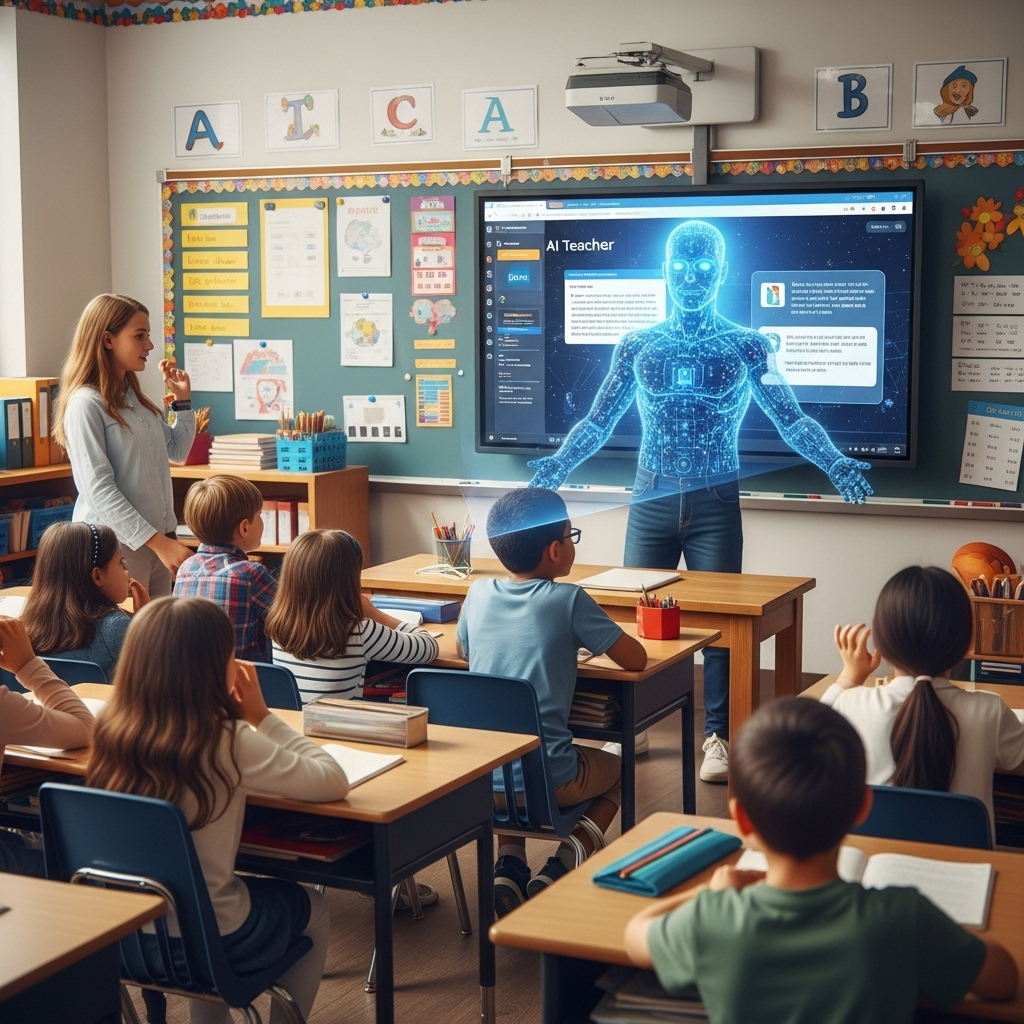
AI Elementary School Teacher in a Diverse Classroom Setting | AI Art  Generator | Easy-Peasy.AI 


This experiment shows that AI may be applied across subjects and understood at an elementary level. Google's Quick, Draw! is used in Activity 2 to demonstrate how AI can identify patterns, offering a real-world illustration of machine learning in action (p. 24).In addition, students understand the value of data organization and verifiying skills that extend beyond AI courses. All things considered, the project develops cognitive thinking and reasoning abilities while providing an interesting, practical introduction to AI.


AI and Art

 Using Ai to Create Art

   This post is in response to the book, "Hands on Ai projects for the classroom: A guide for Elective Teachers." More specifically Project 3, which can be found on page 26. The project suggests examining different art styles across the industry, and then using Ai to create with these styles. They will explore different styles, compare and contrast them, as well as create some pieces of their own. It is aimed to be a very open ended assignment and experience in the classroom. 

I decided to some exploration myself wondering into a internet rabbit hole of different styles and known artist that have left their mark on the world. The possibilites are infinite and at your finger tips when you can use any type of description to create a piece of work. You can tell AI to make a crab made out of recycled materials, or paint a portrait as yourself as if it was Da Vinvi. These obviously are not the same as an artwork you can hold, but it supplies students and anyone else with the ability to imagine what those historic artists could be creating today. Or to show you how something may look and turn out, before pouring hours of work into it.

Here is the picture I created with ChatGPT. My promst was "create an image of a guy surfing in a tropical area but make it look as if Vincent Van Gogh painted it."


It is highly debated whether or not Ai has a place in art or if it just a rip off knock off. I for one think it does belong within the industry. As long as credit is not being taken for something that was made by AI, then there is no issue. It is simply just another style of work to add onto all the rest. It is the opposite of what modern day art has become, today it is all about the process of creating, though by using AI, you can skip the process and have any result you want right at your finger tips. Below is a video by the Museum of Modern Art, exploring this themselves. 


Importance of Teaching AI in K-5 Classrooms


 Monday, September 15, 2025

The Importance of Teaching AI in K-5 Classrooms


As technology advances and many students find themselves in a classroom setting, the use of AI is a topic many educators are questioning. Artificial intelligence is described as a computer system that allows for problem solving and decision making. Some examples include Snapchat Ai, ChatGPT, and so many more. Teaching AI to young students has a few positives, but come with some negatives as well!

First, while teaching the use of artificial intelligence through early education can show students the benefit of citation, using for an extra hand on an assignment, or even just to get an idea of brainstormed ideas, AI goes beyond that. AI leads to many issues including non original texts and even the suspicion of plagiarism. 

Harvard Graduate School of Education is a perfect use and provides many reasons as to why students should and should not use AI when working. The big question, are students really learning and engaging through AI? Professor Ying Xu exaggerates, "Xu shares what we know so far about how AI impacts children's development and the importance of AI literacy." Read more here

Chapter One, Page Four of the EdTech in classrooms K-5 book writes a few reasons as to why AI with young students is a great way to explore beyond their knowledge.

  • "Think in mini lessons; breaking down lessons and adding activities helps make learning more digestible and creates a new opportunity for new information," (Teaching and Learning with EdTech, Page 4).

  • "Make connections; Kids never want to rewrite their work, but when they have a robot on the floor and it's not moving, they want to get it right. Think of it like a code," (Teaching and Learning with EdTech, Page 4).

  • "Allow time to explore; Setting students on their own time to learn and explore. Then the teacher creates a lesson on what they've learned and explored," (Teaching and Learning with EdTech, Page 4). 
This allows for students to have the opportunity to explore their own types of lessons and web tools without the use of AI. While artificial intelligence is a beneficial use for students around the world, it doesn't let them explore and find their best ideas as the computer is doing it for them. Studies show that students in the classroom should use their knowledge and brain and only use AI to cite the correct way and not use the ideas from the computer. 


By Jocelyn Bassi, September 15, 2025

Uses For Ai In Classrooms

    AI in the classroom may present itself as a questionable addition; however, it is an increasingly large part of our society and the educational sphere should welcome and learn to navigate such tools. Not only is it our responsibility to teach learners about the pros and cons of AI so they are better equipped when they inevitably access it, but we must also show them how to ethically use AI and cite it should they use it. AI is a part of our societal fabric and with each passing year I feel as if its presence grows it's evolving faster than we can keep up, but we need to be prepared for the evolution.

Moreover, integrating AI into the learning environment gives educators an opportunity to show students how this technology works instead of exposing them to it as just another unknown object. As cited in Hands-on AI Projects for Elementary Classrooms, even the most simple lesson from a voice recognition challenge to an image sorting task or navigation activity can help students bridge the gap between daily life and unfamiliar concepts. Once they're exposed to AI through these types of lessons, they understand things that AI can do but also things that it cannot. Moving beyond abstract concepts allows students to critically assess technology with which they've already been familiarized.

Furthermore, being involved with classroom lessons provides students with the ability to develop their own AI-based resources instead of simply being users. When educators focus on student-centered lessons, their involvement in development, assessment and testing is inevitable. For example, students can create a basic binary tree to classify images or determine how varying information input could change a result. These lessons not only foster transferable skills such as problem solving, critical thinking and ethical considerations, but also provides them the understanding that they can thoughtfully control AI uses and creations moving forward. This will inevitably help them in any future career path or community engagement when they find themselves surrounded by AI integrations.


Edtech for the K-12 Classroom; Five ways the Pandemic Improved Equity for Students.


The COVID-19 pandemic showed how unequal access to technology is in education. When schools closed in 2020, some districts paused remote learning or gave out devices to help students stay connected. But getting online was just the start—educators also had to support students with special needs or difficult home lives. While there’s no perfect solution, the pandemic highlighted ways to make learning more fair and flexible for everyone.

1. Free Wifi. 
During the pandemic, wifi and hotspots were given out for free. Parents and teachers should continue to encourage this discount/free support to people who truly could use the break. 

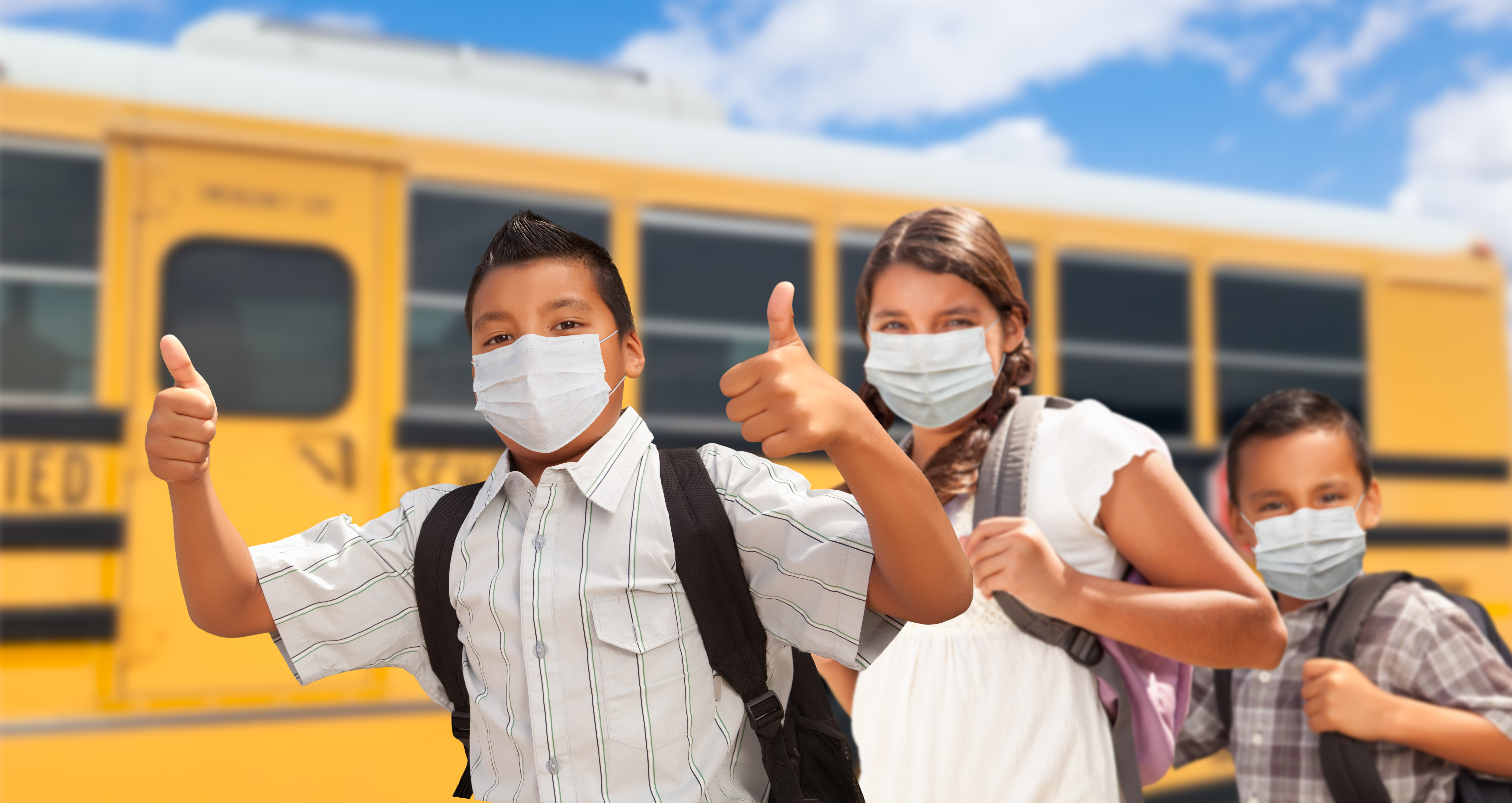
2. School Bus Fleets. 
Some districts delivered food to students during the pandemic, as well as free wifi and library books. This was also a way for the school to stay in touch with families who needed it most. 
The Ebook on article 2, page 37, it states "Delivering those meals provides a safe and distant touch point."d distant touch point. “Delivering those

meals provides a safe and distant touch point

BusBoss: School Bus Safety Plans & Best Practices

3. Public Television. 
A school district in Los Angeles paired up with a public TV station to run educational programs from 7am-7pm during the pandemic. Each station made their content based on certain age groups. The ages ranged from elementary to high school and everything in between. The strongest quote from this whole article is "...learning doesn't stop when schools shut down." 

4. School Buildings.
Some families from certain districts would access the districts wifi by sitting in the parking lot of the school. Technology teams even went as far as jacking up the wifi signals so it could be more easily accessed even from inside of cars. 

5. Old-fashioned Paper.
Some students simply cannot work online. Whether that be from wifi issues, or another issue. One school district handed out both paper and electronic learning toolkits. 


7 Essential Accessibility Tools Every Student Should Know

Accessibility tools aren’t designed just for students diagnosed with disabilities; they are for anyone who wants to improve their learning c...