Showing posts with label AI. Show all posts

Saturday, November 22, 2025

7 Accessibility Tools to Include in Your Classroom


 As teachers, we are always looking for ways to make our classrooms more accessible for the different needs of our students. Here are 7 tools you may not have known about that can help!

1. Built-in Device Accessibility Tools

Most devices have tools already built into them. Familiarize yourself with the accessibility menu of the devices your students handle before you add anything else. Apple, Windows, and Chrome all have a screen reader, zooming, and dictation tools and a dark / high contrast mode option already built-in.

2. Mercury Reader

A free browser extension that removes adds, pop-ups, and clutter from websites to create a distraction-free reading experience. Great for students with ADHD or low vision needs.

3. Grammarly

An AI tool that helps students with revision and clarity in their writing. It offers real-time feedback and suggestions across different platforms. This tool helps tackle barriers with written communication, and supports learning challenges and language processing differences.

4. Visual Timers

Whether physical or digital, visual timers improve accessibility by providing a tangible, non-verbal way to track time. This simple tool can benefit students with hearing impairments, low vision, autism, and ADHD.

5. OpenDyslexic

A free tool that provides different letter spacing and unique downloadable fonts to help prevent common dyslexia issues.

6. Captions

Live captions are a great tool for students with hearing needs. Platforms like YouTube, Google slides / PowerPoint, and Zoom provide students with auto-generated subtitles to anything they are trying to listen to.

7. HelperBird

Last but definitely not least, this is an extension that encompasses most of the things listed above, allowing you to provide accessibility to students with different needs with only one tool. HelperBird offers features like text-to-speech, reading mode, reading rulers, customizable fonts and colors, word prediction, voice typing, and grammar support which can help students with learning differences, dyslexia, and ADHD.

Hope these are useful! thanks for reading!


Monday, October 13, 2025

AI Use and Future


As a current teacher candidate, I've been able to witness the quick integration of AI in the classroom first hand. In this post i'd like to share my personal experience using AI tools, how I see them impacting education, and what developments I think we will see in the future.

Over the past year, I’ve explored a variety of AI tools in both academic and instructional contexts. Tools like ChatGPT for example have become part of my teaching toolkit. As a teacher candidate and instructional assistant, I’ve used it for brainstorming lesson ideas, generating sample writing prompts, and simulating student responses for practice.

There are many benefits to AI (saves time, increases access to personalized content, and enhances creativity) but there are also challenges—such as ensuring that the content is accurate and developmentally appropriate and the temptation to rely too heavily on it for assignments. 

Looking beyond my own use, I see great potential for AI to support students, educators, and schools. For students, AI offers personalized tutoring, instant feedback, and accommodations. For educators, it can reduce workload, and provide real-time data to guide instruction. Schools could use AI for curriculum design or student data analysis. This is why I believe that AI will continue to become even more embedded in educational systems in the future. 


AI and the Future of Education


Artificial intelligence (AI) is quickly changing how we learn and teach. It helps teachers plan lessons, helps students study, and makes school tasks easier. As a future teacher, I have started using AI tools and thinking about how they affect education. In this post, I will talk about how I use AI, how it can help schools, and what I think will happen in the future.

My Current AI Use

I have used a few AI tools like ChatGPT, Canva’s Magic tools, and Diffit. I use ChatGPT as a student and teacher candidate. It helps me write lesson ideas, summarize readings, and check my writing. Canva’s Magic tools help me design posters and slides for class. Diffit helps me make reading materials easier for students who need simpler language.

AI saves me a lot of time and gives me ideas quickly. It helps me stay organized and focused. But there are also some problems. Sometimes, AI gives wrong or repeated answers. It can also make me want to rely on it too much. I’ve learned that AI should be used as a tool to help, not to replace my own thinking.

AI and Educational Practice

AI can help both teachers and students in many ways. It can make lessons more personal by giving students activities that fit their learning style. It can translate materials for students who speak other languages or read text out loud for students with disabilities. Schools can also use AI to check how students are doing and find ways to help them learn better.

However, there are some things to be careful about. AI can show bias because it learns from human data, which might not always be fair. There are also privacy issues, since AI tools often collect user information. Lastly, students might become too dependent on AI and stop thinking for themselves.

Looking Ahead

In the next five years, I think AI will be used even more in schools. It may help teachers grade work, plan lessons, and talk with parents. Students might have AI tutors that explain lessons in ways that fit their needs. But teachers will need to learn how to use AI safely and effectively. One big challenge will be making sure all schools have equal access to AI, not just the wealthy ones.

My Vision

I hope that in the future, teachers and students will have a healthy balance with AI. Teachers should show students how to use AI responsibly and for good reasons. I think AI should be used to encourage creativity, critical thinking, and fairness. For example, AI can help students write stories, learn about new cultures, or support students with learning differences.

AI can make education better if we use it wisely. As a future teacher, I want to use AI as a tool that supports learning while keeping kindness, fairness, and curiosity at the heart of education.


Sunday, October 12, 2025

AI in My Learning Life

AI is everywhere now. I first heard about it back in high school when people were trying out new chat tools online. I didn’t care much back then, but when I got into college, it started showing up in almost everything. Students, teachers and even clubs are using it in small ways every day. For me, I mostly use simple stuff like Grammarly when I make presentations or send emails to professors. 

It helps me fix small grammar mistakes, makes things look cleaner and makes it more presentable. I also use Canva when I make slides or flyers for group projects and class presentations. It saves time and helps me make things look better without spending hours. These tools help a lot when I’m tired or not in the mood to start projects from scratch. 

But sometimes it makes me worry, how much I'm depended on them. A few months ago, I used a online writing tool for an essay and it came out too perfect. It didn’t sound like me at all. It felt kind of fake and weird. That moment made me realize I should not depend on AI for everything. 

Now I only use it when I really need help or want to check something, not to do the full work. AI can help a lot in education if we use it in the right way. Teachers could use it to make lesson plans faster or grade papers. Students who struggle with writing or English could use it to get feedback. But the more we rely on it, the more we forget how to think for ourselves. 

That’s the scary part. There’s also stuff like privacy and who owns the work after using AI. In the next few years, I think AI will be built into school systems like Blackboard or Canvas. It might help with grading or give quick study help. That sounds useful, but it also worries me. I hope schools don’t lose the real learning part. 

The late-night studying, trying again after a mistake and figuring things out. Those are the moments that actually teach us something. If I could choose, I’d want AI to be like a study buddy, not a teacher. It should help, not control. 


It should make learning easier but still let people think for themselves. I think that balance is what will make education better, not just faster.


Picture Credit: Graduate Programs for Educators 

Saturday, October 11, 2025

AI Use & The Future

    AI is growing more and more prevalent as time moves on. My first experience with AI was in my sophomore year of high school as ChatGPT released to the public. Nowadays, I use AI in my personal life for creating generated images and audio clips for leisure projects. In school, I use sites like NotebookLM to give me inspiration for what my assignments could like. For example, it can help me with how to start a project or give me grammatical help for writing assignments. AI can very beneficial at times when an assignment seems confusing or lets you see it in a different way. 
Accelerating Climate Modeling with Generative AI
    AI can help students learn more effectively in the class by giving feedback on the work they've created. It can also help teachers with their job like aiding them while creating the curriculum and creating questions students can answer. But, everything has their pros and cons. For AI, students may become too reliant on the tools and not learn to have creative freedom and do things by themselves. The more we use AI, the more it learns and becomes better at the task. There will always be worries of AI taking over, but overusing it will not help things get better. 

    In the next five years, AI will most definitely be a part of the classroom and a tool for education. My guess is softwares like Google Classroom and Blackboard will integrate AI onto their platforms like a chatbot where you could ask it anything academically. For educators, AI can be used as a tool to help grade assignments and projects. In the future, challenging can occur like not knowing what is AI or not. Students might not be able to think critically with what they are given. The importance of asking questions if things are real or not must also be taught during this stage of AI.
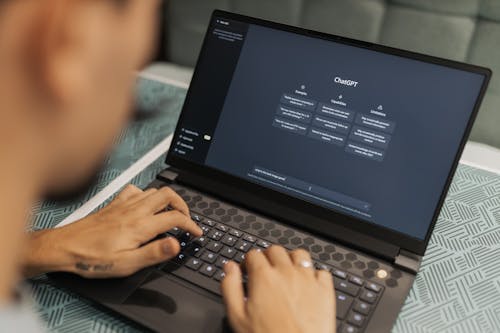
Chatgpt Interface Photos, Download The BEST Free Chatgpt Interface Stock  Photos & HD Images
    In the future, I hope there will be a way where creative freedom and AI can work hand-in-hand in the classroom instead of taking over the human psyche. Responsible AI use in the future is a must for this tool to be ethically and morally right. This includes being transparent about AI usage and doing your own research. Overall, AI will keep growing as a helpful tool in education, but it is up to us to use it the right way so we don't become obsolete in the future.

Monday, September 22, 2025

Global Collaboration in Education

Because of the advancements in educational technology, students and educators are now able to collaborate beyond physical boundaries. The way education is delivered continues to evolve daily, opening up opportunities for students to engage in international dialogue and work together in new ways. Global collaboration brings exciting possibilities to the field of education and in this post i'd like to share what I believe are the best technology tools to facilitate it.


1. Google Workspace

A suite of cloud-based tools that include Gmail, Google Drive, Google Meet, Google Classroom, and more. These tools allow for real-time collaboration on documents, presentations, and spreadsheets, making it easy for students and teachers to work together.

2. Padlet

An online collaborative board that allows students and educators to post notes, images, links, and videos on a shared wall. It’s like a virtual bulletin board.

3. EdPuzzle

An educational tool that allows teachers to create interactive video lessons. It enhances the learning experience by enabling educators to add elements like quizzes, notes, and audio commentary directly into videos. 

4. Epic!

A digital reading platform designed to provide children with access to a variety of educational content in both book and audiobook form, engage kids in reading and encourage a love of books through a fun, interactive, and personalized experience.

5. Gramarly

An AI-powered writing assistant that helps students and educators improve their writing by detecting and correcting grammar, spelling, punctuation, clarity, tone, and style issues.

Using AI for Global Collaboration in Education


The COVID-19 pandemic showed us just how connected the world is, making it the perfect time to help students work together with people from all over the globe. By connecting with others, students can build empathy, learn different perspectives, and improve their communication skills, all part of the Global Collaborator standard in the ISTE Standards for Students. This standard encourages students to use digital tools to work with others, both locally and internationally.

Since the pandemic, digital collaboration has become more important than ever. It helped people stay connected while social distancing, allowed experts to share important information quickly, and helped people understand each other better. When students practice these skills, they not only become better communicators but also leaders who understand and respect people from different backgrounds. 

A great way to promote this is by using projects that connect students from different cultures. Tools like Empatico make it easier for classrooms to connect based on age, schedule, and interests. For example, a teacher might link their class with one in another country. Soon, students are sharing their experiences and learning from each other. One teacher, Anna Crawford, talked about how her students connected with a class in Mexico. What started as nervous camera interactions turned into students teaching each other Fortnite dances and discussing similar issues in their communities, like homelessness and hunger. 

Another important part of the Global Collaborator standard is using technology to learn from experts. Platforms like Flipgrid help students connect with guest speakers and other classrooms from around the world. A project called the #GoalsProject asked students to discuss United Nations Sustainable Development Goals and then work together on projects about issues like climate change and gender equality.

As students get more comfortable with global collaboration, they can tackle bigger challenges, like learning about global problems and finding ways to help solve them. The #TeachSDGs Movement encourages teachers to help students learn about these global goals and act on issues like hunger and climate change.

In short, using AI and technology to connect with others around the world isn’t just about learning new things, it’s about becoming part of a bigger community, gaining new perspectives, and making a positive difference in the world.

Source:

Standards Spotlight: Introduce Students To Our Small, Connected World With The Global Collaborator Standard


Thursday, September 18, 2025

AI for Elective Teachers: Creating an AI Expert Guessing Game

Artificial Intelligence in Education is much more than a tool for lazy students to plagiarize their assignments. Believe it or not, AI can actually be very helpful in the classroom, especially to teachers. From grammar checks to fun projects, If used wisely, AI can be the tool you need to bring your lessons to the next level! 

In project 1 from “Hands-on AI Projects for the Classroom: A Guide for Elective Teachers” students from 4-12 grade think about how experts classify large sets of data and use that information to make decisions to solve real-world problems (Black & Brooks-Young, p.12). The students begin by working in small groups to organize a set of data, considering different types of data representation and how AI can use decision trees to classify data. Then they think about real-world problems that AI could solve with classification algorithms. Next, they develop their own decision tree to classify content from their class. Finally,  they reflect on their learning and consider the impact of using AI for classification.


This project could be used in any subject area, at any point in the school year. It is a great way to spark the students’ interest and get them involved in their learning. The decision trees they make can be a way to study for their assessments, a review, or they can also be used as the assessment itself. AI tools like this can bring a multitude of possibilities to any classroom!


Monday, September 15, 2025

Learning about AI in the Elementary Classroom: A Hands-On Project


September 15, 2025


Interactive exercises help make artificial intelligence (AI) much easier to understand. In Project 2: Training Data and Machine Learning from Hands-On AI Projects for the Classroom: A Guide for Elementary Teachers, students in grades K–5 explore AI concepts using picture cards to organize and sort data (Black & Brooks-Young, 2020, p. 20). Students can use the cards to demonstrate how AI "learns" from datasets, giving concepts like data and algorithms a more real and approachable form.

Learning important terms like algorithm, bias, and dataset is the first step in the project (pp. 20–21). Next, in order to mimic how AI organizes information, students group picture cards into categories and subcategories. They then make sure that all cases are included and that everything that doesn't belong is eliminated in order to check for bias (pp. 24–25). In order to illustrate how AI systems learn from organized information, students lastly develop rules for adding new data. These tasks teach fundamental AI ideas while developing problem-solving, critical thinking, and teamwork abilities.

AI Elementary School Teacher in a Diverse Classroom Setting | AI Art  Generator | Easy-Peasy.AI 


This experiment shows that AI may be applied across subjects and understood at an elementary level. Google's Quick, Draw! is used in Activity 2 to demonstrate how AI can identify patterns, offering a real-world illustration of machine learning in action (p. 24).In addition, students understand the value of data organization and verifiying skills that extend beyond AI courses. All things considered, the project develops cognitive thinking and reasoning abilities while providing an interesting, practical introduction to AI.


AI and Art

 Using Ai to Create Art

   This post is in response to the book, "Hands on Ai projects for the classroom: A guide for Elective Teachers." More specifically Project 3, which can be found on page 26. The project suggests examining different art styles across the industry, and then using Ai to create with these styles. They will explore different styles, compare and contrast them, as well as create some pieces of their own. It is aimed to be a very open ended assignment and experience in the classroom. 

I decided to some exploration myself wondering into a internet rabbit hole of different styles and known artist that have left their mark on the world. The possibilites are infinite and at your finger tips when you can use any type of description to create a piece of work. You can tell AI to make a crab made out of recycled materials, or paint a portrait as yourself as if it was Da Vinvi. These obviously are not the same as an artwork you can hold, but it supplies students and anyone else with the ability to imagine what those historic artists could be creating today. Or to show you how something may look and turn out, before pouring hours of work into it.

Here is the picture I created with ChatGPT. My promst was "create an image of a guy surfing in a tropical area but make it look as if Vincent Van Gogh painted it."


It is highly debated whether or not Ai has a place in art or if it just a rip off knock off. I for one think it does belong within the industry. As long as credit is not being taken for something that was made by AI, then there is no issue. It is simply just another style of work to add onto all the rest. It is the opposite of what modern day art has become, today it is all about the process of creating, though by using AI, you can skip the process and have any result you want right at your finger tips. Below is a video by the Museum of Modern Art, exploring this themselves. 


Friday, September 12, 2025

The Importance of Teaching AI in K-5 Classes


Many students today are growing up in a technology-based environment where AI is very prevalent. Google Gemini, Apple Intelligence, Meta AI, Alexa+, and Microsoft Copilot just to name a few. But, few students realize the effect of AI in their lives and how it works. That's why it's important to help students understand AI at a young age.

Children are already aware of things like AI filters on social media apps and voice assistance through Google and Apple, but there is so much more than that. By helping children interact with AI tools, we can teach them different aspects of how AI works like:

  • "AI does some things very well, such as image/speech recognition, but other tasks like discerning emotions or making ethical decisions are currently done better by humans" (A Guide for Elementary Teachers, 6).
  • "AI robots are able to interact with the environment around them because they have sensors that mimic animal senses" (A Guide for Elementary Teachers, 6).
  • "AI navigation systems are trained to analyze different ways to get from one place to another and make independent decisions regarding the shortest or fastest route to a destination" (A Guide for Elementary Teachers, 6).
  • "There are basic best practices for data collection for machine learning, including how data are gathered, classified, and organized using rules" (A Guide for Elementary Teachers, 6).

By teaching AI to children, we are showing them AI is trained to imitate humans, but they could never replace human intelligence. Making children aware of this at an early age will help them see it more as a tool. As they get older, they will hopefully see AI as less of a threat as they've used it all their lives. Read this blog post to learn more about AI in the classroom.

Friday, September 5, 2025

AI in the Classroom: How Gemini’s New Image Editing Can Spark Student Creativity

An image of the new image editor in Google Gemini
Think about how cool it would be to snap a photo and, with just a few words, turn your classroom into a medieval castle, a rainforest, or even the surface of Mars. Google’s newest Gemini update makes that kind of instant creativity possible.

For pre-service  and practicing teachers, this isn’t just a fun trick, it’s a way to bring lessons to life. You can quickly make visuals for your future classroom, create custom materials that fit your students’ needs, or even inspire projects where kids combine art and storytelling with AI. The latest update also makes it easy to keep characters consistent across edits, mix images together, and tweak things step-by-step until they feel just right.

As you get ready to start your teaching journey, tools like Gemini can help you save time, get creative, and make learning more engaging. Read this blog post to learn more about these amazing opportunities.  You can see my process in these photos.

Original Image

This first one is the original photo with my prompt. 


Then I asked it to replace the robots with spacemen. I thought about changing my nail color, what would you change? 

Update: I went back in to change my nail color: It was the fastest manicure ever and I did not have to tip. 


Ok, here is the final result:  I had to have my own spacesuit, I had to ask a few ways to get rid of the reflection on my left eye, so persistence counts.  Have some fun and think of what you could do for your students!

 I decided to go in a  completely different direction and gave myself a new background, changed my arm position, clothing choice and gave myself a slight sunburn.  This is totally something I might wear, I was super impressed with the capabilities of this tool. 
  I almost feel the heat! Can you guess what my prompts were? 


7 Essential Accessibility Tools Every Student Should Know

Accessibility tools aren’t designed just for students diagnosed with disabilities; they are for anyone who wants to improve their learning c...