Showing posts with label Digital Learning. Show all posts

Thursday, December 4, 2025

VR & AR to Build Meaningful Global Collaboration


Virtual and augmented reality let students experience places, people, and events they otherwise couldn’t. VR boosts engagement and leads to stronger learning when used collaboratively. When VR is combined with collaborative projects, it becomes a bridge for cross-cultural communication. Virtual Reality field trips - for example - let students from different countries experience the same environment, giving everyone a shared starting point for exploring and discussing ideas.

The AR technology seems like something out of a movie that we are years away from being able to achieve but these tools are already being used in some classrooms around the world. Here are some ideas on how to implement them and a short demonstration of how in can be used in a chemistry class:


One of my favorite VR tools is Youtube 360: a collection of immersive, 360-degree videos that let viewers look around in any direction. I like it because Instead of watching a flat video, students can explore the environment as if they’re standing inside it. It can be used in the classroom for things like this, but it can also be used as research for a trip or to explore places like these without having to actually visit them.


Wednesday, December 3, 2025

Exploring WE Teachers

Browsing the site, what immediately stood out to me was that WE Teachers is a free program for educators nationwide: a kind of “teacher-toolkit” that offers professional development on trauma-informed practices. They offer learning modules, courses, workshops, resources, lesson plans, and a video library.


As I think about how I want to set up my future classroom, I realize that the WE Teachers resources are a perfect fit. I want my students to learn compassion, empathy, and social responsibility — not just academic content. I also know that many students carry trauma, stress, or social difficulties outside school. The trauma-informed training could equip me to better support their emotional and mental needs, and create a safe, inclusive environment.

Exploring WE Teachers reminded me that teaching is more than giving lessons — it’s about helping students grow into kind, thoughtful, and caring people. The resources there provide a way to bring those values into everyday classroom life, while also offering support for teachers.

Monday, December 1, 2025

VR + AR in the Classroom and How It Helps With Global Collabs


Lately I keep seeing VR and AR pop up in education, so I decided to look into how teachers are actually using it. I always thought VR was just for gaming, but it’s honestly way more useful than that, especially when it comes to connecting students with other parts of the world.

Why VR/AR Makes Learning Less Boring

Instead of just reading a paragraph in a textbook, VR basically drops you ins
ide whatever you’re learning about. Like if you’re learning about Egypt, you can put on a headset and literally “look around” the pyramids. AR is cool too because it adds things into the room, like 3D models you can move around.

It makes the lesson way less boring and kids actually pay attention because it feels real.


Where Global Collaboration Comes In

The thing that surprised me the most is how VR can be used to work with students in other countries. Two classes who’ve never met can take the same virtual field trip and then talk about it together later.

For example, imagine a class in New Jersey and a class in Japan both watching a 360° video of a city in Tokyo. After the VR part, they hop on Zoom and talk about what they noticed. Stuff like:

  • how transportation looks different

  • how crowded the streets are

  • what the food shops look like

It gives them something real to talk about instead of just awkward “hi, where are you from” type conversations.

Another example: students from two different countries could use CoSpaces/Delightex to build a shared VR world. One group makes a “room” about their culture, the other group builds theirs, and then everyone walks around the virtual space together. It’s honestly way better than the old-school pen pal thing.

Tools I Found While Researching

I checked out Jaime Donally’s ARVRinEDU blog since my professor linked her page. She talks about a ton of tools, but a few stood out:

  • Nearpod VR – teachers can run the same VR field trip for two classrooms at the same time

  • Veative – has VR lessons for science and math that different schools can do together

  • YouTube 360 – honestly the easiest one because most schools can use it with just a phone or Chromebook

These tools don’t require crazy expensive equipment either, which makes it easier for schools anywhere to use them.

My Thoughts

After looking into everything, I feel like VR and AR make global collaboration way more natural. Students aren’t just staring at each other on a screen — they’re sharing a whole experience first and then talking about it. That alone makes the conversations better and helps everyone understand each other more.

It doesn’t replace teachers or normal lessons, but it adds something different that honestly makes learning feel more real.


Resources:

 Nearpod VR video: https://www.youtube.com/watch?v=4VliWohdvAg
YouTube 360 playlist: https://www.youtube.com/playlist?list=PLG3S1C61ls8_JP_nr52XGQImtG-yj8QWy

Sunday, November 30, 2025

Virtual Reality for Global Collaboration in the Classroom


Introduction

Virtual reality is becoming a helpful tool in many classrooms. It lets students explore new places and ideas in a way that feels real. VR also helps students connect with other students in different parts of the world. Many teachers now use tools like Nearpod VR, Veative, and YouTube 360 to make learning more interesting and global.

How VR Helps Students

VR makes students feel like they are standing inside another place. They can look around a museum, walk through a city, or visit a natural area. This helps students learn about new cultures and see how people live in other countries. VR also helps students stay curious because they can notice details they might miss in a book. It is easier for students to understand others when they can see life from a different point of view.

VR and Global Collaboration

VR is great for global collaboration because students in different countries can have the same experience at the same time. Two classrooms can visit the same virtual tour and talk about what they see. This helps students compare their lives and share ideas. After the VR tour, both classes can meet online and discuss their thoughts. They can also work together on a simple project, such as a digital postcard or a short slideshow. These activities help students practice teamwork and learn to communicate clearly with others around the world.

Helpful VR Tools

Nearpod VR has many virtual field trips that teachers can guide. This makes it easy for two classrooms to use the same lesson. Veative provides VR lessons for subjects like science and math. Students can explore these lessons together even if they live far apart. YouTube 360 has many free videos that show different places around the world. Students can use these videos with or without VR headsets, so they work well for many schools.

Conclusion

Virtual reality is a strong tool for teachers who want to help students learn about the world. It brings new experiences into the classroom and helps students understand other cultures. VR also helps students think outside their own community and work with others in a positive way. While VR does not replace the teacher, it makes learning fun and memorable. With tools like Nearpod VR, Veative, and YouTube 360, global collaboration can become a natural part of classroom learning. 

Links


Tuesday, November 25, 2025

How Technology Can Make My Classroom Better


This week I had the chance to learn about using technology in the classroom. It was very exciting because I can see how it can make learning more fun and helpful for students. I learned about different tools that can help students work together and show what they know. These tools can include things like videos, online quizzes, or digital posters.


One thing that I found very valuable was learning how to use technology to connect lessons to real world problems. For example, students can create projects that help their community or solve a problem they care about. This is exciting because it makes learning meaningful and shows students that what they do matters. It also helps students practice important skills like thinking critically and solving problems.


I also learned that technology can help all students participate. Some students may find it easier to explain their ideas using a video, presentation, or other digital project. This is valuable because I want my classroom to be a place where every student can succeed and feel included. Technology can help students show their strengths in different ways.


Reflecting on this experience, I feel more ready to try new tools in my future classroom. I want to make learning fun, helpful, and meaningful. I also want to help students grow their skills and make a positive difference in their world. This experience showed me that using technology the right way can make teaching and learning much better. I am excited to explore more tools and strategies that will help me support all my future students.

Monday, November 24, 2025

My Experience Exploring the “WE Are Innovators” Campaign

 For this assignment, I went through the WE Virtual Learning Center and decided to check out the WE Are Innovators campaign. I took a few screenshots from the guide, because that’s the part that actually caught my attention the most. It talks about using STEM skills to solve real problems, which low-key reminded me of stuff we used to do back in high school when teachers tried to make science fun.


The first screenshot I took was the cover page from the campaign guide. It basically introduces the whole idea of becoming an “innovator” and creating solutions for real social issues. Honestly, I didn’t expect it to look so official. It felt like one of those flyers schools hand out when they want you to join a club.

Then I scrolled down and got to the Awareness + Innovation = Change section. What stood out was the STEM jobs fact. It said STEM jobs will grow way faster than non-STEM jobs. It kinda made me think about my own major and how much technology is actually taking over. Ev
en at Stockton, I see people using apps or AI tools for everything now. It made sense why the site keeps pushing innovation and problem-solving.

The last screenshot I took was the Ways to Take Action page. This one was actually interesting in a practical way. It gave ideas for projects that students can do, like designing products from recycled materials or planning something with your classmates. It reminded me of a group project I did in 10th grade where we had to reuse old plastic bottles to make planters. It wasn’t some crazy big innovation, but it was the first time I realized you can take small ideas and turn them into something useful.

What I liked about this campaign is that it doesn’t just say “go volunteer” or “think positive.” It shows actual steps students can take depending on their grade level. Even though I’m in college now, it still made sense to me because a lot of these ideas could work in real classrooms. If I ever had my own future class, I would probably use the “recycling into new materials” idea since it gives students something hands-on instead of another boring worksheet.

Overall, exploring the WE site wasn’t as bad as I thought. The Innovators guide was probably the most useful part, and the screenshots I grabbed helped me understand how they structure the activities. It’s pretty straightforward and focused on real problems, which is something I appreciate.

Saturday, November 22, 2025

Seven Helpful Accessibility Tools for Students

After learning about different accessibility resources, I wanted to explore more tools that can really support students who have learning or physical needs. There are many options, but I chose seven tools that I think are very helpful for school success. These tools can support reading, writing, focus, and communication. Here is what I found.

1. Read and Write:
Read and Write is a tool that reads text out loud. It also helps students highlight information and understand what they are reading. This tool is great for students who struggle with reading or need extra support with comprehension. It makes school work easier and less stressful.

2. Glean:
Glean helps students take better notes. It records the lecture and lets students go back and listen again. This is very helpful for students who learn better by listening or students who miss information during class. It also keeps notes organized in one place.

3. Speechify:
Speechify turns written text into spoken audio. Students can listen to books, worksheets, or articles. This is helpful for students who have trouble reading large amounts of text. Listening can make the work more enjoyable and easier to understand.

4. C Pen Reader:
A C Pen Reader is a small tool that scans printed text and reads it out loud. This is great for students with reading disabilities. It is easy to carry and students can use it with textbooks or printed assignments.

5. Microsoft Lens:
Microsoft Lens lets students take pictures of notes, worksheets, or whiteboards. The app turns the images into clear and readable documents. Students can even listen to the text. This is helpful for students who need visual support or who have trouble copying notes.

6. Notability:
Notability is a note taking app that lets students write, draw, and record audio. Students can import slides and write on them. It is helpful for students who prefer to work in digital form or need both visual and audio support during learning.

7. Forest:
Forest is an app that helps students stay focused. When students want to concentrate, they plant a virtual tree. The tree grows as long as they stay off their phone. This tool is great for students with attention needs who struggle to stay on task.

These seven tools can make a big difference for students with accessibility needs. They give students more ways to learn, understand information, and stay organized. Every student learns in a different way, and these tools help make the classroom more fair for everyone. If teachers and students try these tools, learning can become easier and more enjoyable. 

To learn more, you can also watch a video on YouTube called Creativity for Accessibility.


Tuesday, November 18, 2025

HyperDocs: Making Learning More Interactive

In many classrooms today, teachers are moving away from worksheets and lessons where only the teacher talks. One tool that helps with this is called a HyperDoc. A HyperDoc is more than a document with links. It is a lesson that lets students take charge of their learning. Teachers can use Google Docs, Slides, or Maps to create a HyperDoc. It contains all the instructions, resources, and tasks students need. Students can work at their own speed while the teacher helps and guides them.

HyperDocs have many benefits. They let teachers give different versions to students without others seeing, which helps with learning at different levels. They give teachers more time to work with students individually or in small groups. HyperDocs also support different ways of learning, because they can include text, pictures, videos, and audio. They are flexible, so teachers can change links or materials quickly without printing new worksheets. HyperDocs can be organized in different ways. One model is the HyperDoc cycle, which has seven steps: Explore, Explain, Apply, Share, Reflect, and Extend. Another model is the 5E model: Engage, Explore, Explain, Extend, and Evaluate. Teachers can also use a Playlist, which is a checklist of tasks, or a Workshop/Agenda, which helps students manage their weekly work.

To make HyperDocs work well, they need to be interactive. Students should do more than just read or watch. Teachers can use Google Slides for navigation, Google Docs for lessons, or Google Maps for exploring. Links can lead to tools like Padlet, AnswerGarden, or shared Docs so students can work together. Teachers should also set rules for using technology, like not deleting others’ work and using the Undo button carefully. Getting started is easy with Find, Copy, Replace, Teach. Teachers can use templates from sites like HyperDocs.co or Teachers Give Teachers. It is important not to add too many resources at once and to show students how to use the HyperDoc before they start on their own.

HyperDocs help students take control of their learning while giving teachers more time to help. They make lessons interactive, flexible, and fun. Any teacher who wants to engage students and encourage creativity should try HyperDocs. To see HyperDocs in action and learn how to create your own, watch this short video tutorial. You can also start right away by exploring a ready-to-use HyperDoc template here.


 What is a HyperDoc? And How Do I Make One?


Monday, November 10, 2025

Poetry Hyperdoc

Hyperdocs are interactive, digital documents that combine all the components of a learning cycle into one linked file, like a Google docs and slides. Hyperdocs use hyperlinks to provide students with a guided learning experience.


While doing research, I came across a Hyperdoc I found to be very interesting and would like to share with you. It is a lesson on Spoken Word Poetry Jam and it is made with Google slides.

In this lesson, students choose a poem from the first link, then create a tune with the music links provided on slide 3 to use as a background for their poem. Finally they present their Spoken word Poetry and have someone record them so they can upload the video.

This is a fun way to teach students about this subject and I'm excited to implement it in my classroom!


Why HyperDocs Make Lessons More Fun and Engaging

 This week I explored HyperDocs, and now I get why teachers love them. A HyperDoc isn’t just a Google Doc with links,  it’s a full interactive lesson where students learn by doing, not just listening. It can be made on Google Docs, Slides, or even Google Maps, and it lets students explore videos, readings, and class activities all in one place.


What makes HyperDocs great is how engaging they are. Instead of just sitting through a lecture, students can click through links, answer on Padlet, or post on a class Doc. It gives everyone a voice and makes the lesson feel more personal and fun. I liked the idea that it replaces “teacher in front, worksheet on desk” with something more creative and hands-on.


If I ever made my own, I’d probably use Google Slides because it keeps things visual and easy to follow. I’d also add an interactive activity at the end, like a Padlet reflection, to get everyone sharing their ideas.

Monday, October 13, 2025

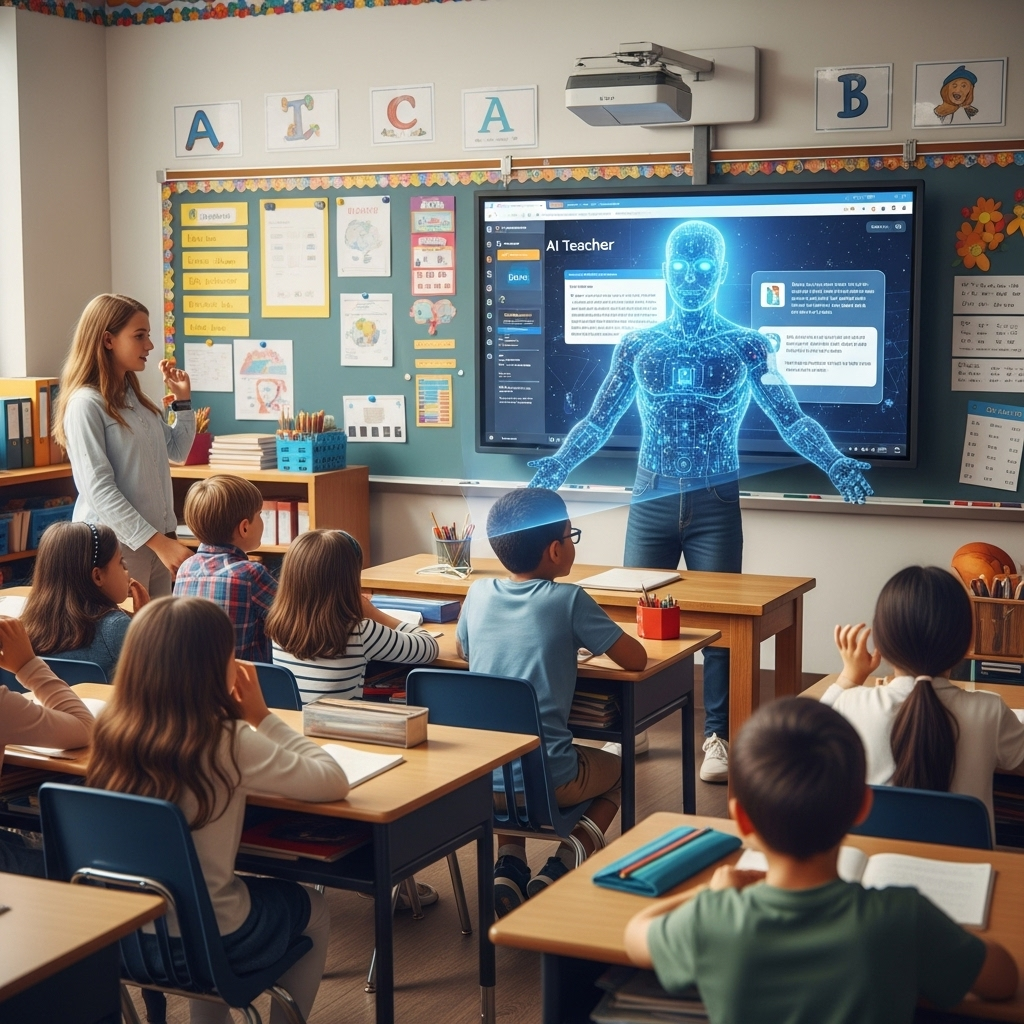
AI Use and Future


As a current teacher candidate, I've been able to witness the quick integration of AI in the classroom first hand. In this post i'd like to share my personal experience using AI tools, how I see them impacting education, and what developments I think we will see in the future.

Over the past year, I’ve explored a variety of AI tools in both academic and instructional contexts. Tools like ChatGPT for example have become part of my teaching toolkit. As a teacher candidate and instructional assistant, I’ve used it for brainstorming lesson ideas, generating sample writing prompts, and simulating student responses for practice.

There are many benefits to AI (saves time, increases access to personalized content, and enhances creativity) but there are also challenges—such as ensuring that the content is accurate and developmentally appropriate and the temptation to rely too heavily on it for assignments. 

Looking beyond my own use, I see great potential for AI to support students, educators, and schools. For students, AI offers personalized tutoring, instant feedback, and accommodations. For educators, it can reduce workload, and provide real-time data to guide instruction. Schools could use AI for curriculum design or student data analysis. This is why I believe that AI will continue to become even more embedded in educational systems in the future. 


Sunday, October 12, 2025

AI in My Learning Life

AI is everywhere now. I first heard about it back in high school when people were trying out new chat tools online. I didn’t care much back then, but when I got into college, it started showing up in almost everything. Students, teachers and even clubs are using it in small ways every day. For me, I mostly use simple stuff like Grammarly when I make presentations or send emails to professors. 

It helps me fix small grammar mistakes, makes things look cleaner and makes it more presentable. I also use Canva when I make slides or flyers for group projects and class presentations. It saves time and helps me make things look better without spending hours. These tools help a lot when I’m tired or not in the mood to start projects from scratch. 

But sometimes it makes me worry, how much I'm depended on them. A few months ago, I used a online writing tool for an essay and it came out too perfect. It didn’t sound like me at all. It felt kind of fake and weird. That moment made me realize I should not depend on AI for everything. 

Now I only use it when I really need help or want to check something, not to do the full work. AI can help a lot in education if we use it in the right way. Teachers could use it to make lesson plans faster or grade papers. Students who struggle with writing or English could use it to get feedback. But the more we rely on it, the more we forget how to think for ourselves. 

That’s the scary part. There’s also stuff like privacy and who owns the work after using AI. In the next few years, I think AI will be built into school systems like Blackboard or Canvas. It might help with grading or give quick study help. That sounds useful, but it also worries me. I hope schools don’t lose the real learning part. 

The late-night studying, trying again after a mistake and figuring things out. Those are the moments that actually teach us something. If I could choose, I’d want AI to be like a study buddy, not a teacher. It should help, not control. 


It should make learning easier but still let people think for themselves. I think that balance is what will make education better, not just faster.


Picture Credit: Graduate Programs for Educators 

Monday, September 22, 2025

Global Collaboration in Education

Because of the advancements in educational technology, students and educators are now able to collaborate beyond physical boundaries. The way education is delivered continues to evolve daily, opening up opportunities for students to engage in international dialogue and work together in new ways. Global collaboration brings exciting possibilities to the field of education and in this post i'd like to share what I believe are the best technology tools to facilitate it.


1. Google Workspace

A suite of cloud-based tools that include Gmail, Google Drive, Google Meet, Google Classroom, and more. These tools allow for real-time collaboration on documents, presentations, and spreadsheets, making it easy for students and teachers to work together.

2. Padlet

An online collaborative board that allows students and educators to post notes, images, links, and videos on a shared wall. It’s like a virtual bulletin board.

3. EdPuzzle

An educational tool that allows teachers to create interactive video lessons. It enhances the learning experience by enabling educators to add elements like quizzes, notes, and audio commentary directly into videos. 

4. Epic!

A digital reading platform designed to provide children with access to a variety of educational content in both book and audiobook form, engage kids in reading and encourage a love of books through a fun, interactive, and personalized experience.

5. Gramarly

An AI-powered writing assistant that helps students and educators improve their writing by detecting and correcting grammar, spelling, punctuation, clarity, tone, and style issues.

Using AI for Global Collaboration in Education


The COVID-19 pandemic showed us just how connected the world is, making it the perfect time to help students work together with people from all over the globe. By connecting with others, students can build empathy, learn different perspectives, and improve their communication skills, all part of the Global Collaborator standard in the ISTE Standards for Students. This standard encourages students to use digital tools to work with others, both locally and internationally.

Since the pandemic, digital collaboration has become more important than ever. It helped people stay connected while social distancing, allowed experts to share important information quickly, and helped people understand each other better. When students practice these skills, they not only become better communicators but also leaders who understand and respect people from different backgrounds. 

A great way to promote this is by using projects that connect students from different cultures. Tools like Empatico make it easier for classrooms to connect based on age, schedule, and interests. For example, a teacher might link their class with one in another country. Soon, students are sharing their experiences and learning from each other. One teacher, Anna Crawford, talked about how her students connected with a class in Mexico. What started as nervous camera interactions turned into students teaching each other Fortnite dances and discussing similar issues in their communities, like homelessness and hunger. 

Another important part of the Global Collaborator standard is using technology to learn from experts. Platforms like Flipgrid help students connect with guest speakers and other classrooms from around the world. A project called the #GoalsProject asked students to discuss United Nations Sustainable Development Goals and then work together on projects about issues like climate change and gender equality.

As students get more comfortable with global collaboration, they can tackle bigger challenges, like learning about global problems and finding ways to help solve them. The #TeachSDGs Movement encourages teachers to help students learn about these global goals and act on issues like hunger and climate change.

In short, using AI and technology to connect with others around the world isn’t just about learning new things, it’s about becoming part of a bigger community, gaining new perspectives, and making a positive difference in the world.

Source:

Standards Spotlight: Introduce Students To Our Small, Connected World With The Global Collaborator Standard


Thursday, September 18, 2025

AI for Elective Teachers: Creating an AI Expert Guessing Game

Artificial Intelligence in Education is much more than a tool for lazy students to plagiarize their assignments. Believe it or not, AI can actually be very helpful in the classroom, especially to teachers. From grammar checks to fun projects, If used wisely, AI can be the tool you need to bring your lessons to the next level! 

In project 1 from “Hands-on AI Projects for the Classroom: A Guide for Elective Teachers” students from 4-12 grade think about how experts classify large sets of data and use that information to make decisions to solve real-world problems (Black & Brooks-Young, p.12). The students begin by working in small groups to organize a set of data, considering different types of data representation and how AI can use decision trees to classify data. Then they think about real-world problems that AI could solve with classification algorithms. Next, they develop their own decision tree to classify content from their class. Finally,  they reflect on their learning and consider the impact of using AI for classification.


This project could be used in any subject area, at any point in the school year. It is a great way to spark the students’ interest and get them involved in their learning. The decision trees they make can be a way to study for their assessments, a review, or they can also be used as the assessment itself. AI tools like this can bring a multitude of possibilities to any classroom!


Monday, September 15, 2025

Learning about AI in the Elementary Classroom: A Hands-On Project


September 15, 2025


Interactive exercises help make artificial intelligence (AI) much easier to understand. In Project 2: Training Data and Machine Learning from Hands-On AI Projects for the Classroom: A Guide for Elementary Teachers, students in grades K–5 explore AI concepts using picture cards to organize and sort data (Black & Brooks-Young, 2020, p. 20). Students can use the cards to demonstrate how AI "learns" from datasets, giving concepts like data and algorithms a more real and approachable form.

Learning important terms like algorithm, bias, and dataset is the first step in the project (pp. 20–21). Next, in order to mimic how AI organizes information, students group picture cards into categories and subcategories. They then make sure that all cases are included and that everything that doesn't belong is eliminated in order to check for bias (pp. 24–25). In order to illustrate how AI systems learn from organized information, students lastly develop rules for adding new data. These tasks teach fundamental AI ideas while developing problem-solving, critical thinking, and teamwork abilities.

AI Elementary School Teacher in a Diverse Classroom Setting | AI Art  Generator | Easy-Peasy.AI 


This experiment shows that AI may be applied across subjects and understood at an elementary level. Google's Quick, Draw! is used in Activity 2 to demonstrate how AI can identify patterns, offering a real-world illustration of machine learning in action (p. 24).In addition, students understand the value of data organization and verifiying skills that extend beyond AI courses. All things considered, the project develops cognitive thinking and reasoning abilities while providing an interesting, practical introduction to AI.


Teaching in the Tech Era

Technology is everywhere, and over the years it has integrated itself into the education system. For some of us—especially at the college level—this wasn’t anything new. But when COVID hit, many teachers and students had a huge wake-up call. Practically overnight, schools shifted from face-to-face classes to fully online learning. Technology has completely changed how we learn today.

In Edtech for the K-12 Classroom (Second Edition, Chapter 1, Article 1), sixth-grade English teacher Laurie Guyon shared her experience of using technology for the first time. She admitted she had never touched the device before but quickly realized its potential:

“I kind of fell in love with it,” she said. “From the first moment we did something on the iPad, I saw a higher level of engagement from students. There was a deeper learning that I started to see happen. I felt like it opened up more of the world and allowed some opportunities I would never have tried in the classroom.” (Krueger, pp. 2–4)

Her story shows what many educators have discovered—technology can spark deeper engagement and create opportunities that might not otherwise exist. At the same time, learning alongside technology comes with its fair share of challenges. The good news? With the right mindset, teaching with technology doesn’t have to feel overwhelming. In fact, it can open doors to creativity, collaboration, and meaningful learning experiences. Here are a few tips to make the most of it.


Embracing Technology Together

Technology is always changing, with new tools popping up every day. Sometimes it feels overwhelming—like it might be easier to stick with what we already know. And that’s okay! In fact, it can be the perfect chance to learn alongside our students. When students get the opportunity to take the lead in their learning, they often become more motivated and engaged.

Break It Down

One great approach is to break lessons into small chunks. Try using mini-lessons followed by a quick quiz or even just a couple of multiple-choice questions. This helps students process new information while it’s still fresh. Learning in short bursts keeps things interactive and allows for quick check-ins before moving on. Think of it like learning in “micro-sessions” rather than trying to absorb everything in one long stretch. 

Make Learning Connections

Schoolwork can sometimes feel repetitive, but making connections to real-life situations keeps it interesting. For example, one teacher shared a story about using a nonfunctional robot in class. Students worked on fixing its system until it finally worked. The same idea applies to writing: a rough draft is like the broken robot, and editing is the process of fine-tuning until it’s ready to go. When students see learning in action, it becomes more meaningful—and fun.

Final Thoughts

These are just a few simple tips to help educators and students make the most of online learning. Technology isn’t slowing down anytime soon, and it’s changing the way we all learn. As educators, the best thing we can do is stay flexible and open to growth. And the good news? We don’t have to do it alone—we’re all lifelong learners, learning together.

Sunday, September 14, 2025

Why Tech Coaches Matter in the Classroom

                  Why Tech Coaches Matter in the Classroom

I was reading Transform Learning Through Technology (ISTE, 2020, p. 25) and the part about the coach being a Change Agent really stood out to me. At first, I thought it sounded a little dramatic, but then I realized what it meant. Coaches are not just people who show teachers how to use programs like PowerPoint, Google Slides, etc. 

The book says, “The coach works in collaboration with both educators and educational leaders, listening to their needs and developing relevant professional development opportunities” (p. 2). That shows that their job is to create a bigger plan for how technology should be used in classrooms, not just give step-by-step directions. 

Another section that made sense to me was about making technology available for everyone. The book says, “Coaches highlight success stories and make sure digital tools are accessible to all learners” (p. 25). I’ve seen how big of a problem this can be. Articles like Digital Equity in Education explain how access to technology can impact student success, which connects directly to what I’ve seen in class.

In one of my college group projects, one teammate had such an old laptop that they couldn’t even run the program the rest of us were using. It slowed down the whole group and was really frustrating for them. If someone could step in and make sure tools actually worked for everyone, it would make the class way easier and more fair.

7 Essential Accessibility Tools Every Student Should Know

Accessibility tools aren’t designed just for students diagnosed with disabilities; they are for anyone who wants to improve their learning c...