Monday, September 22, 2025

Collaboration in Educational Technology: Building Learning Together


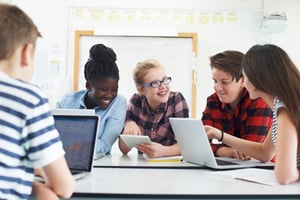
Collaboration is a key component to how people learn and solve issues whilst working together towards achieving a common goal. In education, collaborative learning strategies help students not only gain knowledge but also pick up crucial skills such as teamwork, sharing ideas, understanding and connecting with each other. Through collaboration they also learn how to solve problems. When coupled with technology, collaboration can be a powerful tool.

Why Collaboration Matters in Educational Technology 

  1. When students collaborate, they elevate their thinking by expressing and explaining themselves and they question each other to gain insight for a better understanding.                  
  2.  Skills such as coordinating tasks, giving feedback and using collaborative tools will all be essential to help students navigate the world of work which has become increasingly technological and are sometimes remote, working across different time zones.                         
  3.  Educators also benefit when they collaborate with their peers, sharing lesson plans, helping each other with designing assessments and mentoring each other.

Tool / Type

What It Does

Benefits & Use Cases

Cloud-based document editing (Google Workspace, Microsoft 365, OneDrive)

Multiple people can edit the same document/presentation/worksheet in real time

Good for group essays, peer editing, collaborative research. Speeds up feedback loops Lemonpeak+1

Interactive boards / virtual whiteboards (Jamboard, Padlet, FigJam)

Visual brainstorming and idea mapping; sticky notes, images, drawings

Helps in planning, mapping concepts, group problem solving. Especially useful when students are remote Edcafe AI+1

Discussion / video response tools (Flipgrid, Zoom, breakout rooms)

Students share ideas via video, respond to prompts asynchronously or synchronously.

Builds connection, gives voice to those less comfortable speaking up in class. Good for reflection and peer feedback. Kitaboo+1

Assessment & feedback tools (Wooclap, Peergrade)

Allow peer assessment; real-time polling; interactive question/quiz formats.

Encourages accountability; lets learners see other perspectives; teaches constructive critique EdTech Impact+1

Learning Management Systems (LMS)

Central hub for resources, assignments, discussions, collaboration tools

Keeps things organized; supports blended learning; can integrate many of the tools above  Lemonpeak+1


Overcoming challenges

Collaboration isn’t always a smooth journey, conflicts may arise, or some students might not pull their weight. Teachers can address these issues by setting clear expectations, monitor the group dynamics and provide guidance. Teachers should encourage open communication and respect to ensure that collaboration remains productive and inclusive.

Conclusion

Student collaboration isn’t just a classroom activity, but it

is also a life skill. By working together students learn to communicate effectively, think critically and build relationships that will not only help in their academics but will also help them to thrive in a professional setting.

Sources

https://lemonpeak.com/blog/2024/05/09/shaping-the-future-of-education-collaboration-tools-and-remote-work-technologies-in-edtech/?utm

https://www.edcafe.ai/blog/collaboration-tools-for-teachers?utm

https://kitaboo.com/technology-shapes-collaboration-skills-in-k12-students/?utm

https://edtechimpact.com/categories/collaboration/?utm 


Putting Students First in a Tech Classroom


 The idea behind this is because educators can get so caught up in apps, tools and new technology trends that they forget what really matters the students, who should be the heart of everything they do.

Why Student-Cantered Technology Matters?

The ISTE standards for students aren’t about making students tech savvy but for developing learners to solve real world problems, think critically and how to thrive in a connected world. There are seven student standards:

  • Creative communicators – students who express themselves creatively

  • Global collaborators – those who connect beyond the physical classroom

  • Computational thinkers and innovative designers – they tackle challenges with a sense of confidence 

  • Digital citizens – one who acts responsibly and ethically when interacting online

  • Empowered learners – those who take the initiative and don’t wait for learning to happen, they make it happen

  • Knowledge constructor – students who evaluate and do their research to solve problems

These standards go beyond just merely using technology but seeks to point out how students should engage with knowledge and interact with others in the world.

The Coach’s Role?

Coaches are reminded to use these standards as a means to encourage and support students to meet their learning goals.


Global Collaboration in Education

Because of the advancements in educational technology, students and educators are now able to collaborate beyond physical boundaries. The way education is delivered continues to evolve daily, opening up opportunities for students to engage in international dialogue and work together in new ways. Global collaboration brings exciting possibilities to the field of education and in this post i'd like to share what I believe are the best technology tools to facilitate it.


1. Google Workspace

A suite of cloud-based tools that include Gmail, Google Drive, Google Meet, Google Classroom, and more. These tools allow for real-time collaboration on documents, presentations, and spreadsheets, making it easy for students and teachers to work together.

2. Padlet

An online collaborative board that allows students and educators to post notes, images, links, and videos on a shared wall. It’s like a virtual bulletin board.

3. EdPuzzle

An educational tool that allows teachers to create interactive video lessons. It enhances the learning experience by enabling educators to add elements like quizzes, notes, and audio commentary directly into videos. 

4. Epic!

A digital reading platform designed to provide children with access to a variety of educational content in both book and audiobook form, engage kids in reading and encourage a love of books through a fun, interactive, and personalized experience.

5. Gramarly

An AI-powered writing assistant that helps students and educators improve their writing by detecting and correcting grammar, spelling, punctuation, clarity, tone, and style issues.

Global Collaboration for Education


 Monday, September 22, 2025

Why Should Global Collaboration for Education Important for Young Generations

Many young students are opening their visions to education or furthering their schooling. This topic is controversial to some parents whether AI tools should be used in collaboration, as well as if children should have access to exploring connections globally. While understanding the fears that come with putting themselves out there, it's not personal, but it's for the academic connections. 

A recent website titled "21stCenturyED", explains the benefits and the issues with global connections in education. There are four big ideas when it comes to sharing education globally, which include:

  • Sharing innovative teaching methods and technologies
  • Enhancing professional development for educators
  • Develop cultural inclusive curricula that reflect global realities
  • Expand access to quality education for unreserved populations
These four ideas allow students to grow with one another, while also seeking the differences in how education is taught around the world. Stated in the article, "As over 21% of Americans do not use English as their home language, the skill of patient communication will serve students in America and abroad." I found this quote important to the reader as communication is one of the biggest skills to have when working. Communicating to those around you, in state or globally, is a huge way to seek interest in other topics. 

Global Learning with UNESCO's global monitoring report allows for global partnerships to develop goals for students across the world. Many people in America and out struggle with real education due to poverty and so much more. This system allows for students to receive a fair and proper education like others. 

This is the first time I've ever done something globally through Padlet, which is allowing me to see what education is like with other students around the world. I find it so interesting, and while I cannot share past experiences, this will allow me to speak about my full thoughts on this entire system. I think education is the biggest thing now a days. People who seek jobs are sometimes required to have certain requirements through high school or college. This can be unfair to some as they don't seek the same education as let's say we do. I get to learn and understand their life and how they seek their education while also completing my studies and learning as well.

This website allowed for students to seek independence while also preparing students. A few things its allowing students to do is:
  • Enhance quality and relevance to education
  • Address systematic challenges such as inequality and outdated curricula
  • Develop students who are knowledgeable, culturally aware, and educated in technology
Overall, this system is great and will allow for new ideas to be explore while communicating globally. This change will provide many young educators to seek their education further and allow for students like us to take on the challenge of new and innovative technology with those globally.

At September 22, 2025

Class Room Collaboration

 Collarboration in the classroom is an extremely valuable team for plenty of reasons. Gone are the days of lecturing to students and then sending them on their way. Classes are now a group effort, including everyone and leaving nobody behind. A moshpit of ideas that are guided by your teacher.

Within this post I'll be going through some of the benefits of collabortation as listed by the National Education Association. 

Brainstorming Creative Ideas

 The more minds you have in a classroom, bouncing off one an other and exploring all their different ideas you are increasing the creativity by ten fold. Kids are sometimes scared to share ideas limiting potenial, but through group activity it opens them up and allows a better enviornment  to share their thoughts and feelings. 

Teaches you about Yourself 


Collaborating in a group will not only boost creativity in the group, it forces you to explore your own mind. Sometimes, you'll think of things you did not even realize you felt or knew. For teachers, joining these communites for educators benefits everyone involved and is so very important. The more growth the instructor does, the better they can relay this growth and mindset onto their classroom.

Helping Students

Collaborating with students promotes higher level thinking across the board. Increasing their confidence and self esteem within a group encourages them to explore these more in depth thoughts in a confident manner. Not only is it promoting a intelligence growth, it is promoting their social and team building capabilits. Things that are only increasing in utlity in the world today. 

https://www.nea.org/professional-excellence/student-engagement/tools-tips/benefits-collaboration

Image from https://www.educate-me.co/blog/benefits-of-collaborative-learning 


Global Collaboration in Education

Student Tech: BusBoss on Program Benefits in 2025
To prepare students for a world that is increasingly interconnected, worldwide collaboration is becoming increasingly acknowledged as essential to modern education. According to Kruu Inc., classrooms in the next era of education must transcend time zones and use curriculum that are developed by international teams. This method fosters a vibrant learning atmosphere where students engage with a range of viewpoints, thereby deepening their understanding of cultural nuances and global concerns. Students learn important skills like communication, problem-solving, and flexible thinking, all of which are essential in today's world, by combining project-based learning with global collaboration.


How schools can benefit in different ways:                                  
- Cultural awareness 
- Critical thinking
- Access to resources
- Innovative learning
- Working skills

There are many benefits to global collaboration in education. Students' worldviews are broadened, empathy is developed, and they are inspired to become active in school. Students can interact with classmates around the world through online chats and group projects, providing knowledge and perspectives that enhance their academic path. In addition, as students collaborate to confront problems like social injustice, climate change, and technological breakthroughs, creative answers to global challenges are often developed. In conclusion, global collaboration not only improves academic performance but also prepares students to successfully navigate and constructively contribute to a world that is becoming more interconnected by the day.

Resources

https://www.linkedin.com/pulse/how-next-era-education-requires-global-collaboration-kruu-inc-vwfwc/?trackingId=eIAnRbWnT6SCXkRqwQXY5Q%3D%3D


Collaboration In Education

Collaboration is a huge thing in the classroom. Collaboration can mean the act of working with someone to create something, or two or more people working together to achieve the same goal. As for collaboration in the classroom, this can be achieved by group work, partner work, and even just helping one another on individual work. 

Enhance Team Collaboration: Join One Dynamics' Workshop

I found 10 amazing ways to build collaboration in the classroom. 

1. Choose which students will work together. 

2. Pick group sizes off of what will work best. 

3. Teach students how to listen to one another. 

4. Set rules of language. 

5. Make goals clear. 

6. Give each student a role. 

7. Use real world problems. 

8. Give each group their own task. 

9. Warm students up by playing a game. 

10. Evaluate each group as their own! 

https://gsehd.gwu.edu/articles/10-strategies-build-student-collaboration-classroom

This is just a way to get students acclimated with working together. After this, collaboration should run smoothly. 

Overall, Collaboration is so important in the classroom. It can help students be academically successful, go deeper into content meaning, and most importantly teach students to work with other people. This skill will be a lifelong skill. It can carry into their future careers, when they find a spouse and have a family, and so much more. 


7 Essential Accessibility Tools Every Student Should Know

Accessibility tools aren’t designed just for students diagnosed with disabilities; they are for anyone who wants to improve their learning c...