
Friday, October 31, 2025
Ancient city of Isfahan, Iran

Thursday, October 30, 2025
my virual Field trip-9/11 Tribute center
It is an experience that evokes strong emotions and offers a wealth of education, allowing me to virtually visit the 9/11 Tribute Center. And while I wasn’t there, the online experience was an inside look at the exhibits and personal testimonies — and a glimpse into many moments surrounding September 11, 2001.
The virtual field trip was a way to understand the impact of that day. And speaking with survivors and first responders offered a personal view of the tragedy, depicting both the loss and the incredible strength people demonstrated in its aftermath. What struck me most was the unity and resilience that emerged from such a dark moment in our history.

The experience showed me the significance of empathy, remembrance, and community. The virtual visit to the 9/11 Tribute Center was incredibly insightful and also a powerful reminder that even after a great tragedy, hope and humanity can endure.. 9/11 was such a cruel time for everyone across the world and the United States of America, with the amount of loss and fear it put into people's hearts. The 9/11 Tour was a great way to understand the feelings up close, especially for someone who was not born yet or who was really young
My Virtual Trip to Te Arai Point

Link to the site: https://www.360cities.net/image/img-4380-img-4441-360-2
What's up gamers? I'm back from my virtual trip to Te Arai Point in New Zealand. As far as virtual trips go, this was a pretty location to look at. I hope I get to vist this place for real, in the future, because going somewhere in real life is better than looking at it through any screen.
Monday, October 13, 2025
AI Use and Future

Over the past year, I’ve explored a variety of AI tools in both academic and instructional contexts. Tools like ChatGPT for example have become part of my teaching toolkit. As a teacher candidate and instructional assistant, I’ve used it for brainstorming lesson ideas, generating sample writing prompts, and simulating student responses for practice.
There are many benefits to AI (saves time, increases access to personalized content, and enhances creativity) but there are also challenges—such as ensuring that the content is accurate and developmentally appropriate and the temptation to rely too heavily on it for assignments.
Looking beyond my own use, I see great potential for AI to support students, educators, and schools. For students, AI offers personalized tutoring, instant feedback, and accommodations. For educators, it can reduce workload, and provide real-time data to guide instruction. Schools could use AI for curriculum design or student data analysis. This is why I believe that AI will continue to become even more embedded in educational systems in the future.
AI and the Future of Education

Artificial intelligence (AI) is quickly changing how we learn and teach. It helps teachers plan lessons, helps students study, and makes school tasks easier. As a future teacher, I have started using AI tools and thinking about how they affect education. In this post, I will talk about how I use AI, how it can help schools, and what I think will happen in the future.
My Current AI Use
I have used a few AI tools like ChatGPT, Canva’s Magic tools, and Diffit. I use ChatGPT as a student and teacher candidate. It helps me write lesson ideas, summarize readings, and check my writing. Canva’s Magic tools help me design posters and slides for class. Diffit helps me make reading materials easier for students who need simpler language.
AI saves me a lot of time and gives me ideas quickly. It helps me stay organized and focused. But there are also some problems. Sometimes, AI gives wrong or repeated answers. It can also make me want to rely on it too much. I’ve learned that AI should be used as a tool to help, not to replace my own thinking.
AI and Educational Practice
AI can help both teachers and students in many ways. It can make lessons more personal by giving students activities that fit their learning style. It can translate materials for students who speak other languages or read text out loud for students with disabilities. Schools can also use AI to check how students are doing and find ways to help them learn better.
However, there are some things to be careful about. AI can show bias because it learns from human data, which might not always be fair. There are also privacy issues, since AI tools often collect user information. Lastly, students might become too dependent on AI and stop thinking for themselves.
Looking Ahead
In the next five years, I think AI will be used even more in schools. It may help teachers grade work, plan lessons, and talk with parents. Students might have AI tutors that explain lessons in ways that fit their needs. But teachers will need to learn how to use AI safely and effectively. One big challenge will be making sure all schools have equal access to AI, not just the wealthy ones.
My Vision
I hope that in the future, teachers and students will have a healthy balance with AI. Teachers should show students how to use AI responsibly and for good reasons. I think AI should be used to encourage creativity, critical thinking, and fairness. For example, AI can help students write stories, learn about new cultures, or support students with learning differences.
AI can make education better if we use it wisely. As a future teacher, I want to use AI as a tool that supports learning while keeping kindness, fairness, and curiosity at the heart of education.
Learning with Artificial Intelligence
Monday, October 13, 2025
Artificial Intelligence is changing everyday, as younger generations are emerging into these systems. AI is changing the approach of learning with, as some would say, easy access to assignments. I have not always been a huge advocate for AI tools. One, I am not the best with technology, and two, I was always told I could get into trouble for using it. Therefore, I barely used it. Although with technology emerging, and professors advocating for it, I have done my fair share of using AI with resources so I don't get plagiarized.

Artificial intelligence is not all bad, it provides a lot of source full information for students and educators. Anyone can go and quickly use it for free, and it provides a bunch of useful information. In addition, it asks if the reader wants a more in depth response which is understandable. Practical concerns for AI include biases. Furthermore, it doesn't provide correct or full information for the reader. This can be difficult as the new innovation of eduction is AI, and if it's not supporting correct information, why should we continue to use it?
AI within the next five years is a simple, yet complex question. I think artificial intelligence will enhance and grow. I think it will also be preached upon to use in classrooms and hopefully the information it gives will be accurate. If I had to say many years down the line, I think technology will be mainly about AI and will be used more.
I plan on becoming a detective and technology already is emerging, making it easier to find people. However, with AI I see both positives and negatives to the future of occupations.
The relation between educators and students will stay the same with AI. I think it will allow for open conversations between students and educators, but might be a challenge when it comes to the question, "Was this work from your mind, or AI?"
AI can be used for creativity and ideas, however being source full is the main intention. Never steal ideas, but add links and information so people know it wasn't from your mind directly. Students can use artificial intelligence to brainstorm ideas which can be useful when creating a project. AI recently added translation which is super interesting as there are so many languages and students can connect as well as with educators.
Artificial Intelligence is changing drastically, however there's not always negatives about it. The new generation of AI can and will be useful for educators and students in and out of the classroom!
Picture Credit: Link for Photo
Monday, September 13, 2025
Jocelyn Bassi
My Growing Use of A.I.
Current Use
My Ai use has only extended to ChatGPT, it is the easiest to use and gives the most clear and percise answers in my opnion. I slowly have begun using it for more and more applications. It is really useful to compare different things so you do not have to research them seperately, it is definetly a strong point for the system. The only weak point I can identfiy with Ai is, it's very tough to tell if the information you are recieving is factual or not.
Educational Practice

It seems as if the educational benefits and possibilites are endless with Ai. Anything can be simplified or improved or legitamitely anything you may need is at the tip of your fingers. The spectrum for what is possible on a day to day basis has extended treamendously. I cannot even imagine what the future educational system will look like with A.i at the helm of a classroom. The only drawback is we don't know what is capable of beyond what we tell it, and the prevention of cheating has proved to be almost impossible.
AI now and in the future
In education, artificial intelligence (AI) is becoming a significant force that is changing how teachers plan, evaluate, and interact with the children they teach as well as how students learn. As technology develops further, educators should think about how AI might be used properly and successfully to improve classroom creativity and human connection rather than replace it.
As a student teacher, I have utilized Canva's Magic tools, ChatGPT, and MagicSchool. Writing reflections, coming up with lesson ideas, and creating instructional materials have all benefited using ChatGPT. MagicSchool facilitates class preparation and the creation of explanations that are easy for students to understand. I can quickly create classroom visuals and presentations with Canva's Magic Write and design tools. The benefits of these AI tools include saving time, offering creative inspiration, and helping me organize ideas more efficiently. However I've also observed difficulties, like confirming the accuracy of the data AI offers and not relying too much on it for assignments that call for reflection or firsthand classroom experience.
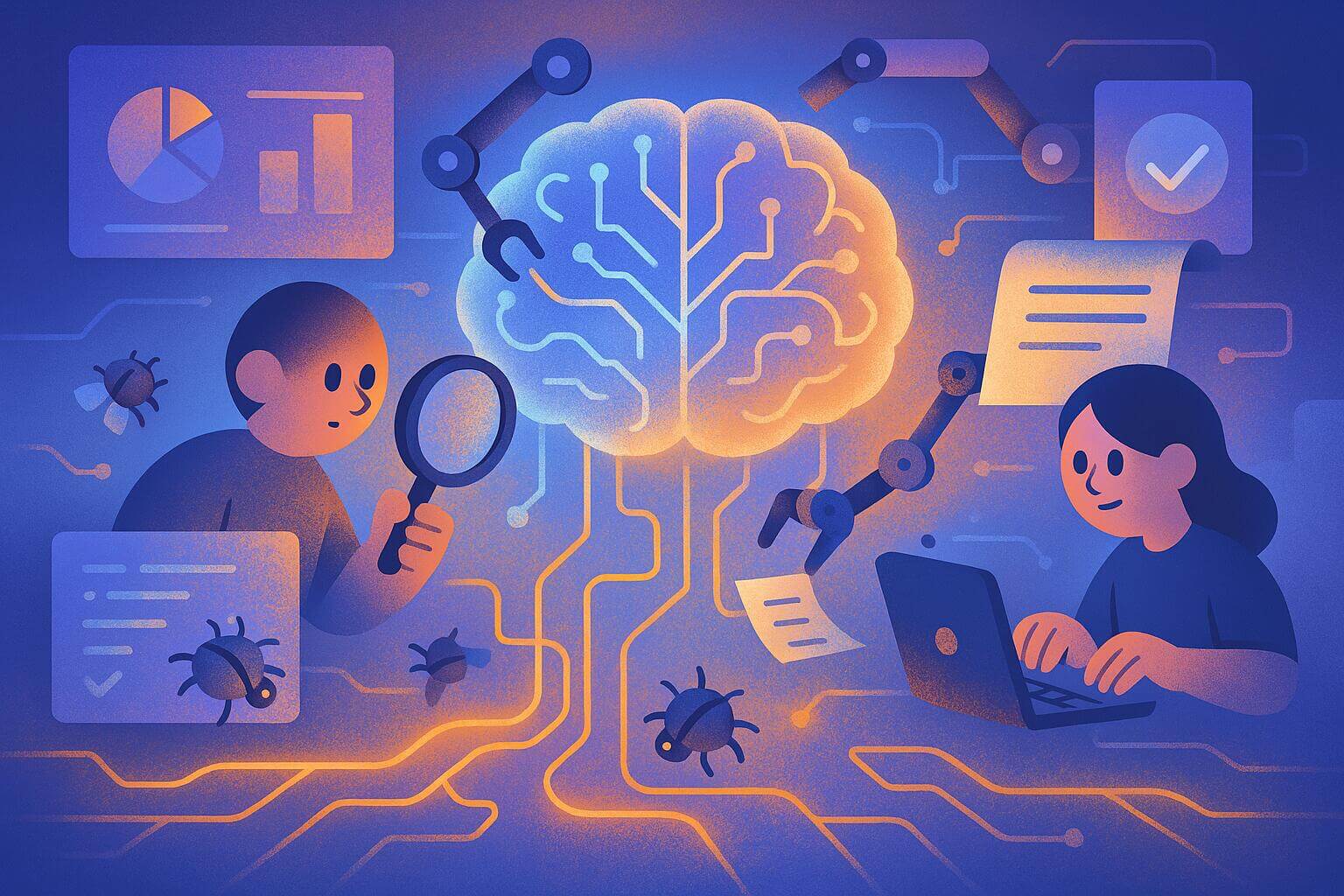
AI holds huge potential for helping students, teachers, andschools. It can provide feedback or grading, let teachers understand how their students are progressing, and help customize learning experiences. AI can help schools discover areas where children might need more support and ease communication. However, there are also practical and ethical issues that require serious consideration. Important factors to take into account include concerns about algorithmic bias, data privacy, and the loss of originality. Students should learn from their teachers how to use AI responsibly, which includes evaluating sources, considering generated content critically, and realizing that AI is a tool, not a substitute for human thought.
AI is likely to become more common in schools over the course of the next five years. AI can be used by educators to produce more accessible classes for a variety of learners, deliver real-time feedback, and create tailored learning pathways. Support that is tailored to each student and meets at their own speed may be beneficial. Unfortunately this also creates new problems, like making sure everyone has equal access to technology, stopping academic dishonesty, and preserving the personal connections that give learning purpose.
AI is reshaping the future of education, but its success depends on how we use it. By approaching AI with curiosity, caution, and responsibility, educators can create classrooms where technology enhances learning and supports every student’s growth.
Current and Future AI.
AI is a huge tool in today's day and age. Many use AI to do work for them, to help them better their work, and for many other uses as well. Is AI a danger to the future of education?
From my own experience, AI is very powerful. I have used ChatGPT a handful of times. I have used this site as a student. Some benefits I have noticed is that ChatGPT would write a whole paper for you. It can also answer any questions you put into it. But are these really benefits when looking at it from a teacher point of view? These "benefits" can also be challenges for teachers. How can you tell what is a true student written paper versus an AI created paper?
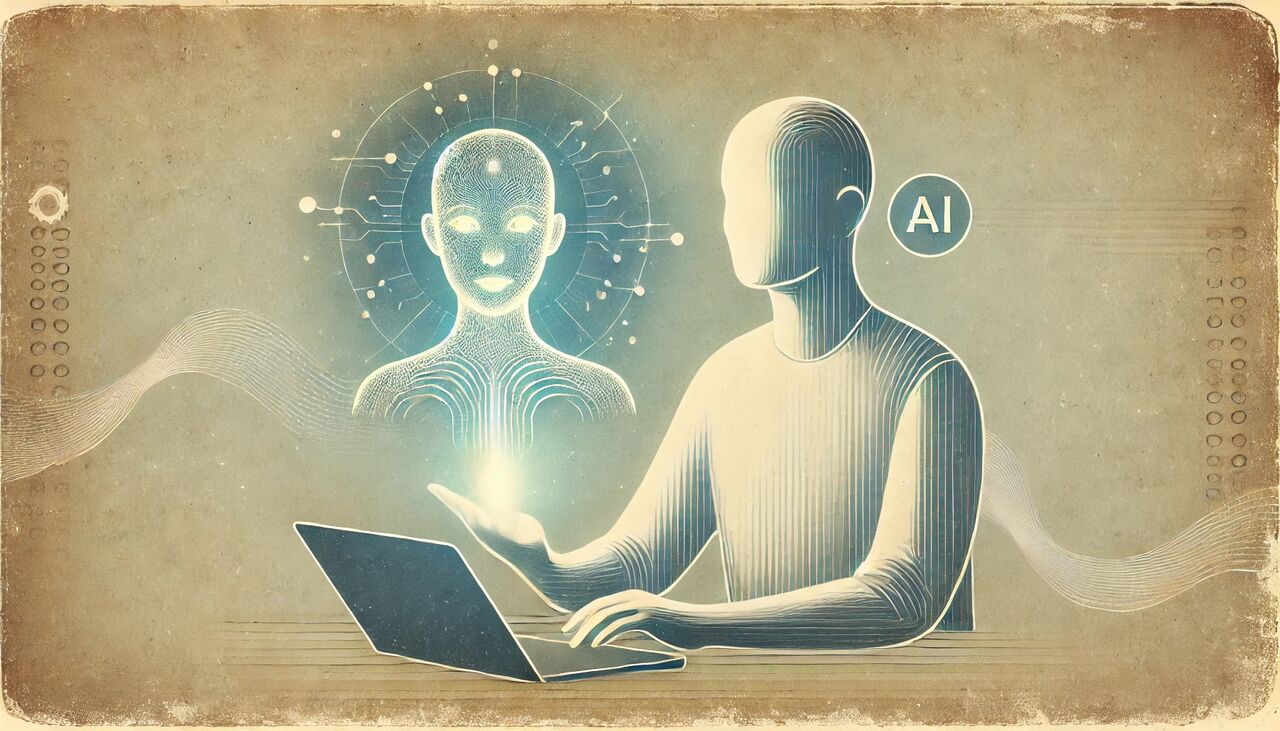
AI however does have a positive impact in certain ways. One of these ways is how it can support leaners, educators, and schools. If a student already did their work, but they want to double check, they can simply put it into an AI website and get feedback on their work. As for educators and schools it is very similar. If a teacher has planned a lesson but needs a little extra something in there, AI can give multiple options.
Looking towards the future, we don't know how AI will evolve. What will education look like in 5 years after being influenced by AI? Will teachers be computers? Will students be retaining information? I believe, that schools will be the same as they are now. AI will be a helpful resource, but I do not believe that it will take over. Especially with the ways that schools can block certain things from their computers and wifi! I believe AI will also bring new opportunities to educators and students. Some of these opportunities could be more advanced knowledge. AI has so much information that I believe both students and educators can unlock and learn more about. As for upcoming challenges caused by AI, I think it could cause confusion and some trouble. The confusion could stem from students using it to help with work, and getting information that is not related. Some trouble could also arise if students use strictly AI as their "own" work. This would be plagiarism which could cause major problems.
To wrap up my thoughts, I believe AI should bring a positive relationship to both educators and students. I think we should all use it as a helpful tool, and not take advantage of its abilities. Some ways we could all use AI responsibly to promote our creativity, critical thinking, and equity is by simply allowing AI to help us when help is needed! We should use it to get more information or to expand onto what we have already created on our own!

Post AI and future use
My Current AI Use
As a college student, I’ve used a few different AI tools like ChatGPT, Canva’s Magic tools, and MagicSchool. I mainly use ChatGPT to help brainstorm ideas, outline essays, and rephrase drafts when I get stuck. Canva’s Magic tools help me design class presentations and visuals, while MagicSchool offers ideas for lesson plans when I’m working on education-related projects. These tools make my work more efficient and help me think more creatively. However, one challenge I’ve noticed is that it can be easy to rely too much on AI instead of pushing myself to develop my own ideas fully. I’ve learned that AI should support my thinking, not replace it.AI & Educational Practitioner. AI is set to bring new possibilities for the way that students and teachers learn and teach. In students’ lives, it could provide individualized feedback, study assistance, access to resources that fit their needs.

The new AI may actually be a way to manage grading for teachers, lesson planning and other activities to allow the faculty to spend it on interacting with students. Some schools may also use AI technology to process learning data to enhance teaching approaches. And yet there is still an important moral stake to be played about not violating data privacy, not introducing bias into AI systems, or inspiring originality. Students have to learn how to use AI responsibly .In the next five years, I think education will take AI to the next level. It could create personalized learnings , making it more accessible to students who need assistance. AI would also enable teachers to monitor students’ progress or to create lessons that adjust to each individual’s learning style.
Educational Blog Post 4-Ai Use & Future
I have some experience with Gemini and with what I have experienced as a student. I like how Gemini summarizes what I’m searching for, especially when it comes to researching designs and for school work. Some benefits of AI I've noticed are things such as helping with writing structures or helping structuring essays and study guides.
I see AI supporting schools and education by organizationing lesson plans. Some ethical concerns I could see some being too reliant on AI to a worrying degree like some teachers might have AI make all their plans or Students cheating so much to where they aren't really learning. I believe AI in the next five years will make a huge impact on education. I do believe one challenge that could be a problem in the future is AI programs like ChatGPT bypassing defecation for it or that it couldn't be differentiated from human writing.
I hope the relationship between students and educators with AI is a relationship like a person with a tool. Where it's nice to have on your belt, but not always needed. Like I said previously AI could be used to structure writings and projects. So in terms of using it to promote creativity is a complex one I feel. Cause while yes you could have the AI make the idea for you. It is ultimately up to you to be motivated to make it come to fruition.
Sunday, October 12, 2025

How I use AI
As time goes on the more advanced our technology is getting. We now have AI or 'Artificial Intellegence'; that can answer questions, make pictures, or even have a conversation with you. While musing it is also one of the most helpful things made with technology as is collects data from hundreds of sources to supply you with an answer in seconds. AI is also now a helpful tool in classrooms but can also be an overused tool to students. I personally use ChatGpt for fixing my punctuation or refining my emails to make it sound more professional. As a student I also use this for studying and asking questions to its chat to see what it tells me. Now since it grabs varius resources some of the answers will not be fully correct so in no way shoould you fully rely on this but its still a very helpful tool.

AI can be an influential tool for students to learn and be taught. As of right now though AI has not been perfected and students still can use the tool with too much of an advantage. In time though this tool can flourish into many amzing tools for students and teachers where students can only get information and cannot get direct answers to questions.
Saturday, October 11, 2025
AI Use & The Future
AI is growing more and more prevalent as time moves on. My first experience with AI was in my sophomore year of high school as ChatGPT released to the public. Nowadays, I use AI in my personal life for creating generated images and audio clips for leisure projects. In school, I use sites like NotebookLM to give me inspiration for what my assignments could like. For example, it can help me with how to start a project or give me grammatical help for writing assignments. AI can very beneficial at times when an assignment seems confusing or lets you see it in a different way.
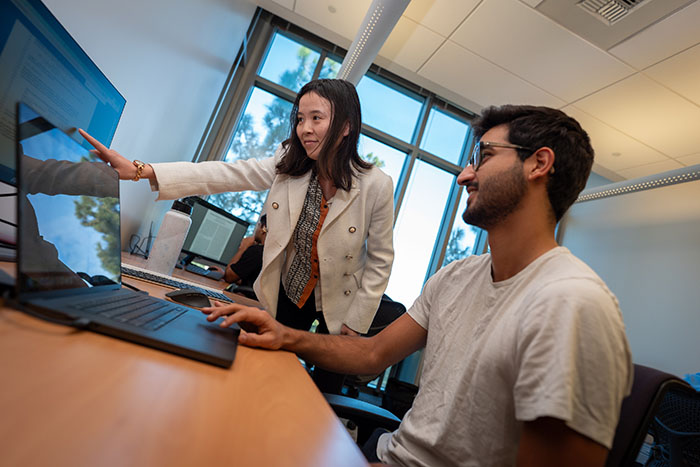
AI can help students learn more effectively in the class by giving feedback on the work they've created. It can also help teachers with their job like aiding them while creating the curriculum and creating questions students can answer. But, everything has their pros and cons. For AI, students may become too reliant on the tools and not learn to have creative freedom and do things by themselves. The more we use AI, the more it learns and becomes better at the task. There will always be worries of AI taking over, but overusing it will not help things get better.
In the next five years, AI will most definitely be a part of the classroom and a tool for education. My guess is softwares like Google Classroom and Blackboard will integrate AI onto their platforms like a chatbot where you could ask it anything academically. For educators, AI can be used as a tool to help grade assignments and projects. In the future, challenging can occur like not knowing what is AI or not. Students might not be able to think critically with what they are given. The importance of asking questions if things are real or not must also be taught during this stage of AI.
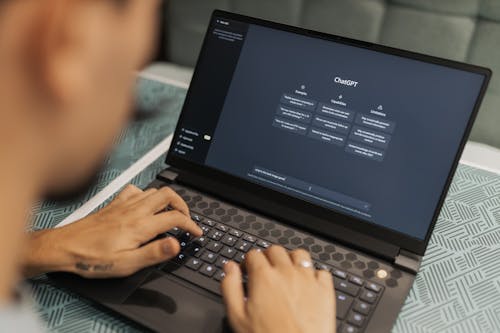
In the future, I hope there will be a way where creative freedom and AI can work hand-in-hand in the classroom instead of taking over the human psyche. Responsible AI use in the future is a must for this tool to be ethically and morally right. This includes being transparent about AI usage and doing your own research. Overall, AI will keep growing as a helpful tool in education, but it is up to us to use it the right way so we don't become obsolete in the future.
Embracing AI in Education: Reflection, Impact, and the Road Ahead
Artificial Intelligence is no longer a thing of future imagination, it's here shaping how we learn, teach and engage with each other.
My current AI use

Over the past couple of years, I have mainly used two AI tools, namely ChatGPT and Copilot. They have both assisted me on my educational journey and otherwise. As a student they helped with breaking complex issues into bite sized pieces that is easier to understand, and these tools are my go-to for generating practice questions when studying.
Benefits and challenges
The ease with which information is right at my fingertips is a plus, it is like my personal assistant. However, the overuse of these technologies can cripple original thinking. There is also the issue of accuracy where AI generated content can sometimes include errors, therefore one has to be very careful and double check finished work.
AI and Educational Practice
AI tools have incredible potential to support students, teachers and schools.
For students they offer a personalized point of view allowing for real-time feedback and tutoring which can be readily available.
For teachers AI can easily create lesson plans, automate tasks like grading assignments and give feedback on students' performance.
For schools AI can assist with administrative duties,
With the introduction of AI tools in education we must be prepared for the risk of bias which can unintentionally reinforce stereotypes. Data privacy is another issue that we must be concerned about – how student’s data is stored, collected and used must be secure and transparent.
Looking Ahead: The Next Five Years
I can see AI becoming so intertwined in education, so much so that students will have access to personalized platforms that fit their needs. AI-powered tools will support real-time language translation, enabling more inclusive, multilingual classrooms. Teachers will be able to step in and support students who are falling behind by using AI tools to examine learning challenges. However, there might be challenges as it relates to affordability, the gap could widen if access to AI tools is limited by one’s financial status.
My Vision: A Responsible Relationship with AI

I would like students and teachers to use AI responsibly; teachers will have to lead by example in this regard. Students should be encouraged to use AI to ask more questions, explore and experiment more. Schools have their part to play in ensuring that AI is easily accessible to all students.
My Use of Ai:
My Current Use of Ai:
I just recently learned about Ai, so I am very much new to it. I only started using Ai to help me with everyday questions or concerns, finding it very much helpful. The only Ai tool that I use is ChatGPT. I have used it as a student and as well as an everyday person that wants to learn something new. A benefit that I have noticed when using Ai is finding answers are so much quicker, I love the fact that I don't have visit a thousand websites or go through different paragraphs to find a single answer. A challenge that I have noticed when it comes to using Ai is that sometimes the information that I am given is incorrect, however, I just do a bit more research to find the correct information.
Practice Between Ai and Educators:
I see Ai being used and supported by learners, educators, and schools more often in the future, I truly feel like Ai will help assist education a better learning experience. Data privacy is something that I am concerned about, since Ai is everywhere, who goes to say that it doesn't know stuff about us and collecting data about us.
Looking Forwards for Ai:
I imagine Ai will influence education in a good way, giving us more information, quicker and less time consuming in the next 5 years. A challenge that I hope doesn't happen is putting teachers out of jobs, although Ai is very helpful, I just hope it doesn't affect pay and jobs for teachers.
My Vision:
I hope educators and students will have a positive relationship with Ai, especially since it makes all of our lives so much easier and stress-free. Ai can be use to promote creativity, critical thinking, or equity, by providing examples or ideas. Sometime when I am doing an assignment and I don't know how to start it or what it is about, I ask ChatGPT for help by providing examples or ideas to help me how to attack that assignment.
Wednesday, October 8, 2025
My Relationship With AI

I've used AI as a student, since my second semester of College. My primary AI has been ChatGPT. At first, I used ChatGPT to help me with coding, for my Programming with Python class. From the very beginning, I could tell that ChatGPT should always be taken with a grain of salt. It had a bad habit of adding certain programming words I didn't know, and that I knew would likely make the professor suspicious if he looked at them. That's why I tried to make the code first, before I had ChatGPT fix it.
The following semesters, I made sure to use ChatGPT as nothing more than a tool to assist me, when I really needed it. For example, one time I missed an essay, and had ChatGPT create a framework for me to base my own essay on.
Then I took a class on AI over the Summer, and was forced to pay for GPT 4o. With GPT 4o, I made a GPT of my own, and got played around with an image generator for the first time.
I can see AI supporting educators by functioning as a tool for organizing tasks, grading assignments, and helping students practice technical skills like math. However, it must not be over relied on, because an AI can not teach in the same way a human can. AI can also be used as a studying tool for subjects like math. The AI can generate math problems for students to solve, and show them how to solve problems, when things get more difficult.
However, like I said before, the AI must also be taken with a grain of salt. AI is known to have digital hallucinations, making up information it doesn't know was made up. For that reason, teachers must verify the information the AI presents them, before believing it to be true. Take the seahorse emoji, for example. The AI is programmed to say you are right, so it keeps claiming there's a seahorse emoji, only to get it wrong, and look for a new one.

I believe in the future that educators will incorporate ChatGPT into their lessons. Some teachers will be smart enough to not let ChatGPT completely run the show, but other teachers may find themselves overreliant on the AI, at the cost of educational abilities. I also believe that rules will be put in place, as they are now, that limit just how much students are allowed to rely on ChatGPT. We want students to think for themselves after all.
Subscribe to:
Comments (Atom)
7 Essential Accessibility Tools Every Student Should Know
Accessibility tools aren’t designed just for students diagnosed with disabilities; they are for anyone who wants to improve their learning c...
